
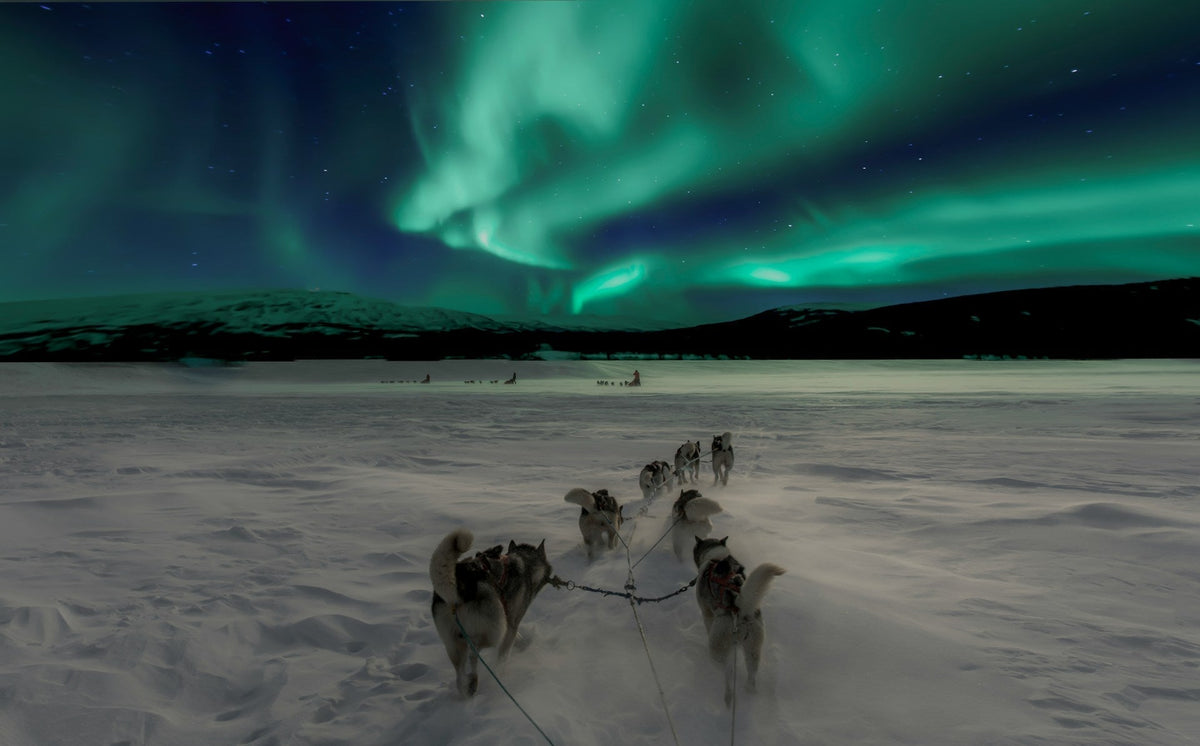
When people say “Husky,” they often picture a blue-eyed Siberian Husky. The name is also used for the Alaskan Husky and, more loosely, for several related northern dogs and modern wolf-look types.
This guide compares the Siberian Husky, Alaskan Husky, Alaskan Malamute, Tamaskan and Utonagan. It explains which are established breeds, how they differ in size and working style, and what living with each type may involve.

What does “Husky” mean?
Husky is not the name of one formal kennel-club group containing every dog in this article. In ordinary use, the word refers mainly to the Siberian Husky and Alaskan Husky. It is also used more loosely for northern sled dogs and dogs that resemble them.
It helps to distinguish three categories:
- Recognized breed: Has a defined breed standard and can be registered through major kennel organizations, as with the Siberian Husky and Alaskan Malamute.
- Functional dog type: Bred primarily for performance, with more variation in appearance, as with the Alaskan Husky.
- Developing modern type: May have its own registry or breeding community without recognition from organizations such as the FCI, as with the Tamaskan and Utonagan.
This distinction matters when choosing a dog. A breed standard cannot guarantee health or temperament, but it makes expected size, appearance and documentation more consistent. With less standardized dog types, the breeder, pedigree, health records and qualities of the individual line require even closer examination.
Husky breeds and northern dogs compared
| Dog type | Status | Approximate size | Original main purpose | Important consideration |
|---|---|---|---|---|
| Siberian Husky | Recognized breed | 20–23.5 in (50.5–60 cm) 35–60 lb (15.5–28 kg) |
Light loads at moderate speed over long distances | Sociable and enduring, but often strongly motivated to run and chase |
| Alaskan Husky | Functional sled-dog type | Varies by line and intended work | Sled racing and performance | Appearance and working drive vary widely |
| Alaskan Malamute | Recognized breed | Preferred freighting size: about 23–25 in (58.5–63.5 cm) and 75–85 lb (34–38 kg) | Heavy freighting, strength and endurance | Larger and more powerful than a Siberian Husky |
| Tamaskan | Modern developing type with its own registry | Varies by registry and line | Wolf-like companion with working ability | Check the registry, pedigree and health testing carefully |
| Utonagan | Modern wolf-look dog type | Varies among lines | Primarily companionship and outdoor activity | Limited standardization makes broad claims unreliable |
Siberian Husky and Alaskan Malamute measurements come from their official breed standards. Measurements for Alaskan Huskies, Tamaskans and Utonagans should be treated as line-specific rather than universal.
Siberian Husky: the recognized Husky breed

The Siberian Husky developed from the sled dogs kept by the Chukchi people of northeastern Siberia. Dogs were later brought to Alaska and became famous through long-distance racing. The FCI lists the United States as the breed’s official country of origin, while its historical roots lie in Siberia.
The Siberian Husky Club of America breed standard describes a friendly, gentle and outgoing dog that is not naturally possessive or suited to conventional guard work. That does not make the breed effortless to train: many Siberians are independent, curious and highly motivated by movement beyond the garden fence.
Blue eyes are allowed but not required. Brown eyes and heterochromia are also typical. Color and eye color should never be more important than health, temperament and documented breeding practices when choosing a puppy.
Alaskan Husky: bred for sled-dog performance
The Alaskan Husky is not an FCI-recognized breed with one fixed standard. It is a functional sled-dog type developed primarily for traits such as speed, endurance, pulling motivation, appetite, recovery and the ability to work in a team.
An Alaskan Husky may therefore be lighter, taller or shorter-coated than the classic image people associate with a Husky. Sprint lines can differ substantially from long-distance lines. Peer-reviewed research into Arctic sled-dog populations also shows that genetic ancestry does not always follow the simple visual categories people expect.
- Appearance varies more than it does within a standardized breed.
- Working capacity and motivation may be exceptionally high.
- Needs depend on lineage, age, conditioning and intended work.
- A retired working dog may require a very different routine from a dog raised primarily as a companion.
The video provides a glimpse of Alaskan Huskies working as sled dogs. Before choosing this type, ask the breeder or rescue organization specifically about the dog’s line, previous training, physical capacity and realistic daily needs.
You can also follow @hanneoistad and @snostormhusky for an insight into life with active sled dogs in the Norwegian wilderness.
Alaskan Malamute: a powerful northern freighting dog

The Alaskan Malamute is not a larger version of the Siberian Husky. It is a separate breed with a different physical structure and historical job. While Siberian Huskies are associated with efficient movement and lighter loads over distance, Malamutes were developed for strength and heavy freighting.
The official standard gives a preferred freighting size of approximately 25 inches and 85 pounds (63.5 cm and 38 kg) for males, and 23 inches and 75 pounds (58.5 cm and 34 kg) for females. Natural variation exists, and functional structure, proportion and movement matter more than size alone.
Malamutes are described as affectionate, friendly and playful, but they are powerful dogs that require thoughtful socialization and handling. Blue eyes are not typical and are a disqualifying fault under the FCI standard. Responsible breeders should be able to explain documented screening for hips, eyes and polyneuropathy, as well as other tests relevant to their lines.
Tamaskan: a modern dog type with a wolf-like appearance

The Tamaskan is a more recently developed dog type with ancestry from several northern dogs and other wolf-look lines. The Tamaskan Dog Register describes it as an ongoing breed-development project with its own registry and an open studbook for approved outcrosses. It is not recognized as a breed by the FCI.
It would therefore be inaccurate to describe all Tamaskans as calmer, more cooperative or easier than traditional sled dogs. Those qualities vary with ancestry, upbringing and the individual dog. A prospective owner should investigate:
- which registry and code of ethics the breeder follows
- the documented pedigree and any approved outcrosses
- health results for both parents and close relatives
- temperament and working level among mature dogs from the same line
- the support the breeder provides throughout the dog’s life
Utonagan: a wolf-look dog with varied ancestry

The Utonagan was developed in the United Kingdom as a wolf-look dog using northern dogs and German Shepherd lines. Its development overlaps with the histories of the Northern Inuit and Tamaskan communities.
Because the type does not have one internationally recognized standard or one unified registry, broad claims about its size, health and temperament should be treated cautiously. The name alone reveals less than the documentation for the individual dog.
Ask for verifiable health results, meet mature relatives where possible, and evaluate the dogs’ real activity levels rather than choosing solely for their wolf-like appearance.
Siberian Husky vs. Alaskan Malamute: what is the difference?
| Characteristic | Siberian Husky | Alaskan Malamute |
|---|---|---|
| Build | Medium-sized, lighter and athletic | Larger, heavier and more powerful |
| Historical work | Light loads at moderate speed over long distances | Heavy loads requiring strength and endurance |
| Eyes | Brown, blue, parti-colored or one of each | Brown; blue eyes are not permitted by the standard |
| Expected size | 35–60 lb (15.5–28 kg), depending on sex | Preferred freighting size about 75–85 lb (34–38 kg) |
| What owners must plan for | Running drive, prey interest and secure handling | Considerable physical strength, independence and careful socialization |
In simple terms, the Siberian Husky is lighter and more speed-oriented, while the Malamute is more powerful and built for heavier work. Neither should be chosen for appearance alone.
Temperament, children and other animals
Many northern sled dogs are sociable, expressive and accustomed to working near other dogs. At the same time, they may be independent and less focused on following instructions than breeds developed for close handler cooperation.
A Siberian Husky can be a rewarding family dog in an active household that understands the breed. The same can be true of the other dogs in this guide, but “family-friendly” never guarantees that a particular dog suits every home.
- Children and dogs should have calm adult supervision.
- The dog needs a place where it can rest undisturbed.
- Prey drive can complicate life with cats, rabbits and other small animals.
- Early introductions may help, but they cannot erase inherited predatory behavior.
- The temperament of the parents and mature relatives provides valuable information before buying a puppy.
If you want a highly active dog with greater emphasis on handler cooperation, compare these dogs with our Australian Shepherd guide. The Australian Shepherd is still a demanding working breed in its own right, not an easier substitute for every owner.
How much exercise does a Husky need?
Most healthy adult sled dogs need an active lifestyle. There is no single number of minutes or hours that suits every dog. Age, health, temperature, conditioning, breeding line and exercise intensity matter more than a universal target.
A balanced routine may combine:
- walks over varied terrain with time to sniff
- gradually conditioned endurance exercise
- pulling activities with appropriate equipment and instruction
- search games, problem-solving and calm skills training
- social contact and enough uninterrupted rest
More exercise is not always the answer to pacing, howling or destructive behavior. These signs can also be associated with separation distress, pain, frustration, insufficient sleep or unsuitable routines. A sudden behavior change deserves veterinary assessment.
Training, prey drive and recall
Huskies can learn a great deal, but training must compete with powerful rewards in the environment. Reward-based methods, short sessions and consistent routines are usually more productive than repeated drilling or physical correction.
Many Siberian Huskies retain strong prey interest and a desire to run. A dog that recalls perfectly in a training field may make a different choice when a deer, rabbit or open gate appears.
- Build attention and recall from puppyhood without testing the dog in unsafe situations.
- Use a long line where it is legal and practical.
- Provide opportunities to run in securely fenced areas.
- Inspect fences, gates, collars and attachment points regularly.
- Follow the leash laws that apply wherever you are walking.
Read more about GPS tracking, leash laws and dog safety. A GPS tracker can help locate a dog that escapes, but it does not replace a leash, training or secure fencing.
Can a Husky stay home alone or live in an apartment?
Staying home alone
Some adult dogs can learn to relax alone for moderate periods. Others become distressed or vocal quickly. Alone-time training should be gradual, and a puppy cannot be expected to cope with a full working day alone.
Howling, panting, drooling, escape attempts and destruction soon after you leave may indicate separation-related distress rather than simple boredom. See our guide to separation anxiety and alone-time training if your dog cannot settle.
Apartment living
Floor area is not the only consideration. A Husky may adapt to apartment living when exercise, rest, temperature, alone time, noise and access to safe outdoor space are managed realistically. Howling, stairs, heat and limited space may nevertheless make an apartment more difficult.
A large house and garden do not solve these needs automatically. A dog does not become fulfilled simply by being left outside without social contact or purposeful activity.
Cold weather, warm climates and summer heat
A dense double coat helps many northern dogs cope with cold, wind and snow. They still require gradual acclimatization, shelter, dry bedding, water and supervision rather than being treated as immune to cold-weather risks.
Warm weather requires particular care. A thick coat, strong working drive and intense exercise can increase heat strain. Schedule demanding activity for cooler periods, provide shade and water, and stop if the dog develops abnormal panting, weakness, confusion or poor coordination.
The American Veterinary Medical Association warns that parked vehicles can become dangerously hot within minutes. If you are planning a cooler-climate trip, our guide to visiting Norway with a dog covers travel rules, leash laws, camping and outdoor safety.
Do Huskies shed a lot?
Yes. Siberian Huskies and Alaskan Malamutes have double coats and can release large quantities of undercoat during seasonal shedding. The timing and duration vary with the individual, climate and indoor living conditions.
- Brush regularly and more frequently when the undercoat loosens.
- Work gently rather than pulling at tangles or skin.
- Bathe when needed, but not so often that the skin and coat become dry.
- Do not routinely shave a double coat; consult a veterinarian or qualified groomer when clipping is medically necessary.
- Check paws, nails and skin after long walks or pulling activities.
Tamaskans and Utonagans may also shed heavily, although coat density varies more among lines. If minimal hair in the home is a major requirement, explore lower-shedding dog breeds rather than hoping a northern dog will be the exception.
Health and expected lifespan
It is misleading to place all five dogs under one list of “common Husky diseases.” They have different breeding histories, and health risks vary among breeds, lines and individual dogs.
| Dog type | What prospective owners should investigate | Approximate lifespan |
|---|---|---|
| Siberian Husky | Eye examinations, hip evaluation and relevant DNA results such as SPS1 and SHPN1, according to country and line | Often about 12–14 years, with individual variation |
| Alaskan Malamute | Hips, eyes and polyneuropathy, plus other testing recommended by the relevant breed club | Often about 10–14 years |
| Alaskan Husky | Testing suited to the line’s ancestry and work, along with injury and veterinary history in working dogs | Varies significantly among lines and individuals |
| Tamaskan and Utonagan | Registry, pedigree, hips, elbows, eyes and any additional testing relevant to the breeds used in that line | Available population data are more limited and line-dependent |
The Siberian Husky Club of America recommends regular eye examinations, hip evaluation and DNA testing for Shaking Puppy Syndrome type 1 and Siberian Husky Polyneuropathy type 1 in breeding dogs. The Alaskan Malamute Club of America lists hips, eyes and polyneuropathy among its required screening tests.
No screening program guarantees a healthy puppy. Documentation reduces uncertainty and shows how a breeder addresses known risks. Ask to see the actual results rather than accepting “the parents are healthy” as evidence.
Husky puppies, breeders and ownership costs
Puppy prices vary by breed, country, line, registration and breeder. A fixed figure in an international guide quickly becomes outdated and says little about quality. Contact the appropriate breed club and several documented breeders for a realistic local price range.
Before reserving a puppy, ask about:
- registration and complete pedigree information
- health results for both parents
- temperament, prey drive and activity levels within the line
- whether the dogs are bred for recreation, racing, other work or showing
- socialization and environmental exposure before the puppy leaves
- the support available if life with the dog does not go as planned
The purchase price is only one part of the cost. Food, insurance, veterinary care, vaccinations, classes, harnesses, pulling equipment, secure fencing, transport and care for an active dog may cost considerably more over time.
Which Husky type might suit you?
Begin with the life you can offer rather than the photograph you like best.
| You are looking for | Type to investigate | Essential caveat |
|---|---|---|
| An established, medium-sized sled-dog breed for an active outdoor lifestyle | Siberian Husky | Plan for prey drive, running motivation, shedding and independent decisions |
| Sled-dog performance matched to a specific discipline | Alaskan Husky | Select a line based on its real working purpose and capacity |
| A powerful northern breed developed for heavy freighting | Alaskan Malamute | Size and strength place substantial demands on handling |
| A modern dog with a wolf-like appearance | Tamaskan or Utonagan | Investigate the registry, breeding line and health documentation especially carefully |
If you do not want to plan daily around exercise, safety, coat care and companionship, none of these dogs is an obvious choice. Choosing a less demanding dog is not a failure; it is responsible ownership.
Safety for dogs with a strong desire to run
An independent dog with prey drive may cover a considerable distance after escaping. Prevention always comes first: suitable equipment, secure gates, safe transport, recall training, long-line use and compliance with local leash laws.
A tracker can provide an additional safety layer and help show where a dog is if an accident happens. Compare the technologies in our guide to GPS trackers versus AirTags for dogs.
View your dog’s position, location history and activity with Lildog GPS. Use it alongside responsible containment and training.
See the Lildog GPS tracker for dogsFrequently asked questions about Husky breeds
How many Husky breeds are there?
There is no single official number because “Husky” is not one kennel-club group. The Siberian Husky is a recognized breed, while the Alaskan Husky is a functional type. Several related northern dogs are also called Huskies informally.
Are Husky and Siberian Husky the same?
Many people mean Siberian Husky when they say Husky. However, the word is also used for the Alaskan Husky and as a broader informal term for some northern sled dogs.
Is an Alaskan Malamute a Husky breed?
No. The Alaskan Malamute is a separate recognized northern breed. It is often compared with Huskies because both are sled dogs, but the Malamute is larger and was developed for heavier loads.
Which Husky type is the largest?
Of the two recognized breeds in this guide, the Alaskan Malamute is normally larger and heavier than the Siberian Husky. Alaskan Huskies, Tamaskans and Utonagans show greater variation among lines.
Can a Husky be a good family dog?
Yes, in a household that can meet the dog’s needs for exercise, companionship, training and secure handling. The individual dog and the family’s daily life matter more than the label “family dog.”
Can a Husky live with a cat?
Some can, particularly after careful early introductions. Many retain strong prey drive, however, and safe coexistence with small animals cannot be guaranteed. Introduce them gradually and use physical separation where necessary.
Can a Husky safely go off-leash?
Many Siberian Huskies have strong prey drive and a desire to run, making unfenced off-leash areas risky. Use secure areas or a long line and follow local leash laws.
Do all Huskies need several hours of exercise every day?
Most need an active and varied lifestyle, but one hourly target cannot suit every dog. Exercise must reflect age, health, conditioning, temperature, lineage and intensity. Rest is also essential.
How long do Huskies live?
Siberian Huskies often live approximately 12–14 years, while Alaskan Malamutes are frequently placed around 10–14 years. Lifespan varies with genetics, health, weight, environment and veterinary care.
Do Huskies shed heavily?
Yes. Their double coats can release large amounts of undercoat, particularly during seasonal coat changes. Regular brushing controls loose hair but does not make the breed low-shedding.
Share:
World’s Largest Dog Breeds: 15 Giant Dogs Compared
How Cold Is Too Cold for Dogs? Winter Walks, Paws and Breaks