
The World’s Largest Dog Breeds – A Guide to Giant Dogs
The world’s largest dog breeds stand out because of their size, strength and everyday needs. Some can weigh more than 100 kg as adults and require significantly more space, food and care than smaller dogs.
Many large dog breeds were originally bred for work, including guarding property, pulling loads, protecting livestock or assisting in rescue work. Today, several of them are mainly kept as family dogs, but their size still affects everything from exercise needs to health, training and cost.
In this guide, we look at some of the largest dog breeds in the world, including the Great Dane, English Mastiff, Leonberger, Newfoundland and Saint Bernard. You will get an overview of size, temperament, health, grooming and what it actually takes to live with a giant dog.

What counts as a giant dog?
A giant dog breed is usually considered a dog that weighs more than 45–50 kg as an adult, or has a shoulder height far above the average dog. Some of the largest dog breeds in the world can weigh more than 90 kg and stand close to one metre at the shoulder.
There are also major differences between the breeds. Some are very tall and relatively lean, while others are heavy, broad and extremely powerful.
Many large dog breeds were originally used as:
- guard dogs
- draft dogs
- farm dogs
- hunting dogs
- rescue dogs
Although their size can seem overwhelming, many giant dog breeds are known for being calm, stable and very loyal to their families.
Overview of the world’s largest dog breeds
| Breed | Height | Weight | Origin | Family dog? |
|---|---|---|---|---|
| Great Dane | 72–90 cm | 50–90 kg | Germany | Yes |
| English Mastiff | 70–91 cm | 70–110 kg | England | Yes |
| Irish Wolfhound | 75–90 cm | 50–70 kg | Ireland | Yes |
| Leonberger | 65–80 cm | 50–70 kg | Germany | Yes |
| Newfoundland | 66–74 cm | 50–70 kg | Canada | Yes |
| Saint Bernard | 65–90 cm | 60–90 kg | Switzerland | Yes |
| Great Pyrenees | 65–82 cm | 45–60 kg | France | Yes |
| Tibetan Mastiff | 61–76 cm | 55–90 kg | Tibet | Varies |
| Anatolian Shepherd Dog | 71–81 cm | 40–65 kg | Turkey | Varies |
Although all of these are considered large dog breeds, their personalities, activity levels and daily needs vary significantly from breed to breed.
Great Dane – one of the tallest dog breeds in the world
The Great Dane is widely regarded as one of the tallest dog breeds in the world. Some individuals have set world records with a shoulder height of more than one metre while standing on all fours.
Despite its size, the Great Dane is often known as a calm and social family dog with a strong attachment to its owners.
The breed was originally used for hunting large game such as wild boar, but today it is mainly kept as a family dog and companion.
- extreme height
- calm temperament
- strong bond with the family
- short coat and moderate grooming needs
- relatively short lifespan
Because of its size, the breed needs enough space, stable training and controlled growth during puppyhood to reduce strain on joints and bones.

English Mastiff – one of the heaviest dog breeds in the world
The English Mastiff is considered one of the heaviest dog breeds in the world, and some individuals can weigh well over 100 kg.
The breed has a long history as a guard dog and protector, but today it is known as a calm and stable family dog with enormous physical strength.
Many Mastiffs are surprisingly calm indoors and often prefer short walks and being close to the family rather than constant activity.
- extreme body weight
- strong guarding instinct
- calm personality
- heavy drooling
- high food and veterinary costs
This is a dog breed that requires both space and clear handling. Even calm individuals have enormous physical power.
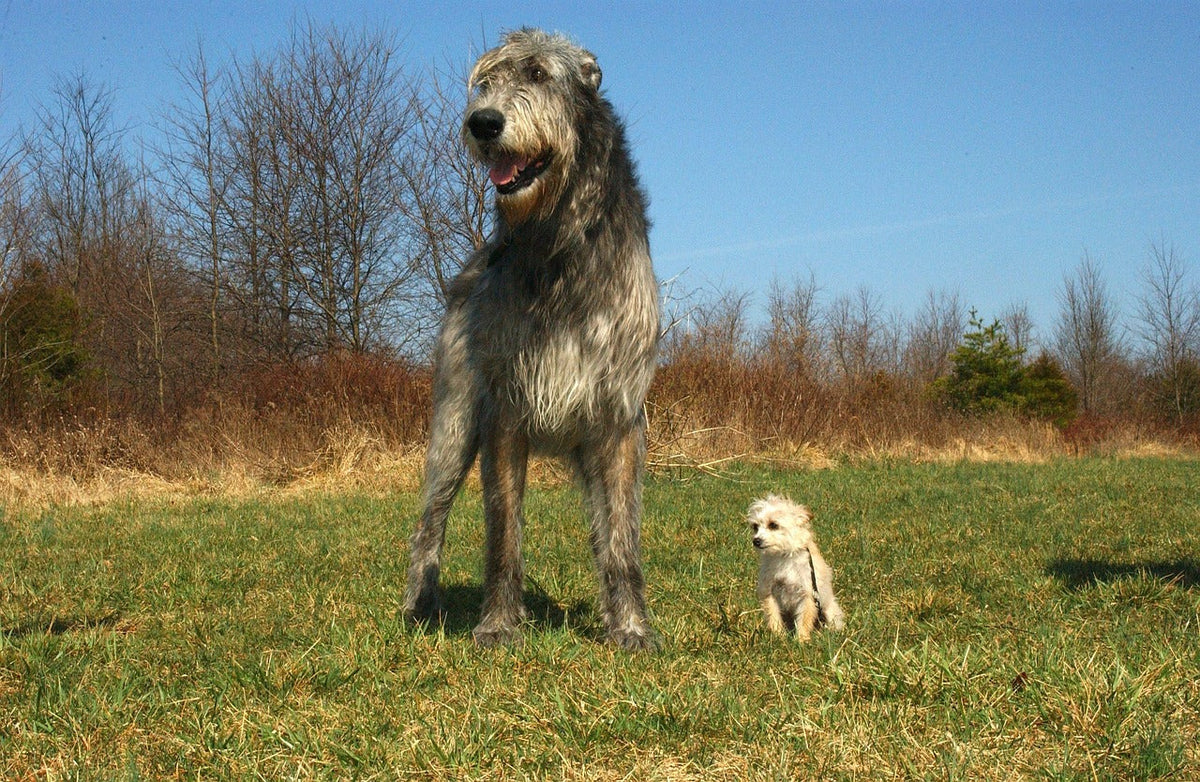
Irish Wolfhound – the tallest of the sighthounds
The Irish Wolfhound is one of the oldest and largest dog breeds in the world. The breed was originally used for hunting wolves and deer in Ireland.
Many Irish Wolfhounds stand over 85 cm at the shoulder, making them among the tallest dogs in the world.
- calm temperament
- tall and lean body structure
- strong attachment to the family
- low aggression
- short lifespan
Although the breed is enormous, it is often described as calm and gentle indoors.

Leonberger – the gentle giant
The Leonberger is a large dog breed from Germany, known for its calm temperament, powerful build and long coat.
Today, the breed is mainly kept as a family dog and is known for being social, stable and gentle with children.
- calm personality
- thick double coat
- great physical strength
- strong family attachment
- significant grooming needs
The Leonberger requires plenty of space, a lot of food and regular grooming compared with smaller dog breeds.

Newfoundland – the giant water dog
The Newfoundland is a large and powerful dog breed from Canada, originally used for work in water and cold climates.
The breed is known for its strong swimming abilities, thick coat and calm temperament.
- powerful body structure
- excellent swimmer
- calm temperament
- thick double coat
- significant grooming needs
The Newfoundland is often considered one of the most family-friendly giant dog breeds.

Saint Bernard – the rescue dog from the Alps
The Saint Bernard was historically used for rescue work in the Alps and is known as a large and heavy working dog with a calm temperament.
- massive body structure
- calm personality
- great physical strength
- heavy drooling
- strong family instinct
The breed is less active than many people expect, but its size still means it requires enough space and carefully controlled growth during puppyhood.

Great Pyrenees – the large livestock guardian
The Great Pyrenees was originally used to protect sheep flocks in the mountain regions between France and Spain.
- thick white coat
- independent personality
- strong guarding instinct
- calm temperament
- great endurance
The breed is known for being independent and is best suited for owners who want a large guardian dog.

Tibetan Mastiff – a massive guardian dog
The Tibetan Mastiff is a large and powerful dog breed that was historically used to protect livestock and property in the Himalayas.
- massive coat
- strong territorial instinct
- great physical strength
- high independence
- suspicious of strangers
This is a demanding breed that is generally best suited for experienced dog owners.

Anatolian Shepherd Dog – the powerful protector
The Anatolian Shepherd Dog is a large livestock guardian breed from Turkey, originally bred to protect animals from predators such as wolves and bears.
- great physical strength
- strong guarding instinct
- high endurance
- independent personality
- calm behaviour
The breed requires confident leadership and is generally not considered ideal for first-time dog owners.

What does it cost to own a giant dog?
Giant dog breeds are often far more expensive to own than many people expect. A dog weighing 70–100 kg eats significantly more food than smaller breeds, and several other costs increase with size.
Large dog breeds often require:
- large amounts of high-quality food
- more expensive veterinary care
- larger medication doses
- stronger crates, beds and equipment
- larger transport solutions and vehicles
Some giant dog breeds can eat several kilograms of food per day as adults, especially active working dogs.
Veterinary expenses also tend to be higher because:
- medications are dosed by body weight
- surgery is more demanding on large dogs
- joint issues are more common
- certain heart conditions occur more frequently
If you are considering a giant dog breed, your budget should be part of the decision from the very beginning.
Is a giant dog right for you?
Giant dog breeds can be calm, loyal and highly family-oriented, but they are not suitable for everyone. Even relaxed individuals require significant space, time and responsibility.
Before choosing a giant breed, it is important to think about:
- space in your home and car
- long-term costs
- time for training and grooming
- physical handling and control
- exercise needs
- health concerns and lifespan
Many giant dog breeds are known for being:
- calm indoors
- extremely loyal
- gentle with family members
- stable and patient
At the same time, giant breeds can also come with challenges such as:
- heavy shedding
- drooling
- shorter lifespans
- higher expenses
- great physical strength
For the right owner, a giant dog can become an incredibly loyal and dependable companion for many years.
Frequently asked questions about the world’s largest dog breeds
What is the largest dog breed in the world?
The Great Dane is often considered the tallest dog breed in the world, while the English Mastiff is generally considered one of the heaviest.
Which giant dog breed is the most family-friendly?
Leonbergers, Newfoundlands and Saint Bernards are often considered among the most family-friendly giant dog breeds.
How much does a giant dog eat?
Giant dog breeds eat significantly more food than smaller breeds, especially dogs weighing 70–100 kg.
Do giant dogs have shorter lifespans?
Yes. Many giant dog breeds have shorter average lifespans compared with smaller breeds.
Are giant dog breeds aggressive?
Most giant dog breeds are known for being calm and stable, but proper socialisation and training are still extremely important.
Can giant dogs live in apartments?
Some calm giant breeds can adapt to apartment living if they receive enough exercise, but most do best with plenty of space.
Share:
Dogs in Hot Cars: The Ultimate Guide to Summer Safety
Dogs and Water Play: A Guide to a Safe and Fun Summer