
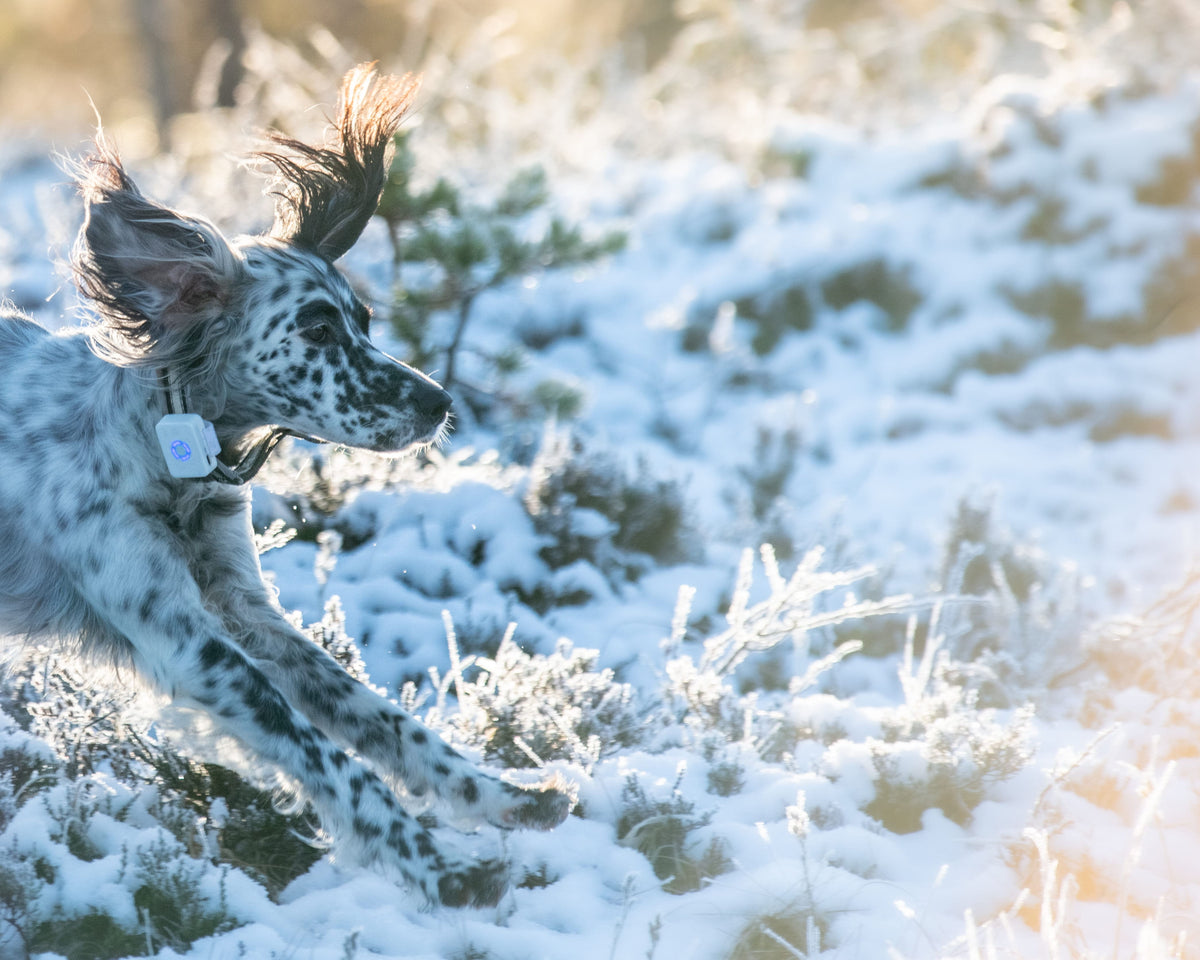
Your dog is happily trotting through the snow. Then you stop to talk to a neighbour, and after a while your dog starts lifting its paws. On the way home, you want to pop into a shop. Is it safe for your dog to wait outside? And how cold is too cold?

The thermometer gives you part of the answer. The rest comes from your dog and the conditions around you. A dry dog that is moving experiences the cold differently from a wet dog sitting still in the wind. Coat, size, age and health also make a difference.
This guide explains how to judge a winter walk, what to do when your dog shows signs of discomfort, and why salted pavements can be just as hard on paws as the cold itself.
How cold is too cold for a dog?
It is too cold for the planned walk when your dog can no longer stay comfortable in the conditions you are facing. That can happen before the temperature drops below freezing, especially if your dog has a thin coat and gets wet. Another dog may be comfortable on a short walk in colder, dry weather.
So the question is not just “how many degrees below zero?” Also ask: What kind of dog is this? How long will you be out? How windy is it? Is the coat wet? Will the dog have to wait around? The Cornell University College of Veterinary Medicine’s winter safety guidance explains how age, size, health, coat and acclimatisation affect a dog’s tolerance of cold.
Use the temperature to help you plan, not as permission to keep going regardless. If your dog is uncomfortable, an online chart saying the weather should be “safe” does not change what your dog is showing you.
| Conditions | What to consider | How to adapt |
|---|---|---|
| Cool weather with rain or sleet | Wet fur and wind can make a walk uncomfortable even when it is not freezing. | Choose a shorter route with an easy way home, and consider weather protection. |
| Dry winter weather and steady movement | Your dog’s coat, health and experience with cold affect how well it copes. | Keep checking in, especially when you stop. |
| Strong wind or severe cold | A normal-length walk may be too demanding. Remember that your dog still has to get home. | Stay close to home and choose short toilet breaks over one long walk. |
| Waiting outside a shop or at a stop | Your dog may be sitting or standing still on cold, wet ground. | Plan a sheltered option or take your dog home first. |
This table is a planning aid, not a medical assessment or a guarantee that your dog will tolerate the weather.
Why do some dogs feel the cold more than others?
Coat type matters more than how fluffy a dog looks
A dense, insulating undercoat provides different protection from short, thin fur. Long fur does not automatically mean good insulation for winter. A dog that has recently been clipped short may need more protection than before.
Northern breeds have different natural advantages from many short-haired dogs, but even a thick coat does not make a dog invulnerable. Read more in our guide to Husky breeds and other northern dogs.
Size, age and health affect a dog’s needs
Small dogs and dogs with little body fat may need extra protection. That does not mean a dog should be overweight to cope with winter. The goal is a healthy body condition and gear suited to the individual dog.
Puppies and older dogs may have more difficulty regulating their body temperature. Illness can also affect how a dog handles cold. If your dog has pain, reduced mobility or a known health condition, ask your vet how to adapt winter activity.
An active dog needs a fresh check when it stops
During a brisk walk, a dog produces heat through activity. When you stop, the situation changes. It is easy to miss this if you are warm in your own coat and comfortable while chatting.
Plan for breaks too: Where will your dog wait? Is there shelter from the wind? Can your dog stay dry? Can you get indoors quickly if it starts to feel cold?
How can you tell if your dog is cold?
Some dogs make it clear that they want to go home. Others keep following you even when they are no longer comfortable. Look for changes from your dog’s normal way of moving:
- It is shivering or its jaw is chattering.
- It is tucking its tail between its legs.
- It is lifting a paw and standing on three legs.
- It hesitates, stops or refuses to keep walking.
- It is seeking shelter, a door or the route home.
Respond before the discomfort gets worse. Turn back, find shelter or end the walk. Do not pull your dog along just to finish your usual route.
Lifting a paw does not necessarily mean the whole dog is becoming dangerously cold. Salt, ice balls, sharp snow crust or an injury can also hurt. Stop and check the paw somewhere safe.

How to make a winter walk more comfortable for your dog
A walk that starts close to home is easier to cut short than a route that leaves you several miles from the car. On cold days, plan so you can turn back early.
- Choose a route you can shorten. Several short walks give you a chance to reassess your dog between outings.
- Check the whole forecast. Look at wind and precipitation as well as temperature, especially on exposed routes.
- Avoid unnecessary waiting. Long conversations, queues and shopping errands should not catch your dog off guard in the middle of a winter walk.
- Bring what you may actually need. On longer outings, spare booties, a suitable coat and a dry resting mat can be useful.
- Plan the way back. Your dog needs to stay comfortable for the return journey, not just the trip out.
Skiing and mountain walks bring extra challenges: hard snow crust, ski equipment, changing weather and greater distance from help. A dog used to everyday walks is not necessarily ready for a long winter hike just because it is excited at the start.
Bring drinking water on longer outings. Snow is not an adequate substitute for water. Cornell’s winter safety tips for dogs are a useful starting point before more demanding walks.
Give your dog something to do indoors when walks are shorter
Set up a simple scent search using part of your dog’s usual food ration, practise a familiar skill or offer an activity toy. A few short, calm sessions help make the day more than a shortened walk followed by waiting for the next one.
Indoor activities do not replace the need to go outside, but they can supplement shorter walks when the weather makes your usual route unsuitable.
When does a dog need a coat?
A coat can help when your dog’s own fur does not provide enough protection for the walk you are planning. It may be useful for short-haired dogs, small dogs, recently clipped dogs, and dogs that need extra help because of age or health.
Choose a coat for the conditions. An insulating coat and a waterproof coat do not necessarily serve the same purpose. In wet and windy weather, consider how well it protects against rain and wind.
- Your dog should be able to walk, sniff and toilet without the coat getting in the way.
- Check the fit around the chest, armpits and legs.
- Make sure the coat does not become soaked or collect snow.
- Keep checking your dog’s paws, ears and other exposed areas.
A coat does not make a long walk safe in every kind of weather. It should support your dog’s comfort, not be a reason to ignore signs that it wants to go inside.
Road salt can make paws sore before your dog seems cold
Your dog walks comfortably on snow, then starts limping on the pavement. The temperature may not be the problem. Road salt and salty slush can irritate the paws, especially if the skin is already dry or has small cracks.
Look for licking, redness, tenderness or reluctance to put a paw down. Repeated paw licking should not automatically be dismissed as a winter habit.

A simple routine after walking on salted roads
- Rinse the paws with lukewarm water. Remove salt and dirt, including between the toes.
- Dry them well. Pay attention to the spaces between the toes and the underside of each paw.
- Check for injuries. Look for cracks, cuts or anything stuck in the paw pads.
- Adapt the next walk. If possible, choose a route with less salt and consider well-fitting dog booties if this keeps happening.
A paw balm made for dogs may help as an extra measure, but it does not replace rinsing or checking for injuries. Booties must fit properly, and in wet salty slush you need protection that keeps the liquid out. Remove them after the walk and check the paws.
Snowballs and hard snow cause different problems
Snow can collect in the fur between the toes, while sharp ice or hard snow crust can injure the paw pads. Check your dog’s paws during the walk, especially if its gait changes. Remove packed snow gently rather than pulling at the fur.
Contact a vet if your dog keeps limping, has visible wounds or swelling, or seems to be in significant pain. A foreign object or another problem may be to blame. Do not continue the walk to see whether your dog will “walk it off.”
What if your dog has to wait while you shop?
It is easy to assume your dog will be fine during a quick shop because it has just completed a long walk without a problem. But a dog sitting still outside faces different conditions from a dog moving alongside you.
Treat a shopping stop as a separate part of your walk plan. Where will your dog wait? Is the spot dry and sheltered? What if there is a queue? If you do not have a suitable option, it is better to take your dog home first.
Lildog Hotel: a temperature-controlled place to wait near shops
Lildog Hotel locations are outside selected shops, shopping centres and restaurants in several countries. They are designed for short stays while an owner runs an errand, with temperature control for both cold and warm days.
In cold weather, gradual heating and a warmer section of the floor give the dog the option to settle somewhere warmer. The floor also has a cooler section, so the dog can choose where to lie down. Air conditioning is used on warm days. The aim is to provide a more comfortable place to wait than an exposed spot outside a shop.
According to Lildog, each compartment is disinfected with UV light between uses. Temperature control and disinfection serve different purposes: one supports comfort, the other hygiene. Gradual temperature changes are not a guarantee against respiratory infections, and disinfection does not mean all risk of infection has been removed.
Allow time for your dog to get used to the hotel, and keep the first stays short. Pay attention to how your dog responds rather than assuming every dog will be comfortable in a new space. Lildog recommends limiting stays to about one hour. You can check available locations in the Lildog Hotel app and read the Lildog Hotel information.

When cold becomes more than uncomfortable
Hypothermia and frostbite are different conditions. With hypothermia, the body’s core temperature falls. Frostbite is local tissue damage, often affecting exposed areas such as the paws, ears and tail.
These signs need prompt veterinary attention
If your dog becomes unusually lethargic, unsteady or less responsive, develops slow or abnormal breathing, or collapses after exposure to cold, contact a vet immediately. Move your dog to a dry, sheltered, warm place while you get advice.
Do not wait for the skin to change colour before seeking help if you suspect frostbite. The full extent of the damage may become clearer later.
What should you do while contacting the vet?
Move your dog away from the cold and wrap its body in dry blankets or towels. Handle it calmly and follow your vet’s advice about warming and transport.
Do not rub or massage an area you think may be frostbitten. Do not use a hair dryer, heating pad or other strong, direct heat on the area. If you are outside and the tissue could freeze again, ask the vet what to do next.
A temperature-controlled dog hotel is not a treatment for a dog that is cold-injured or unwell. If you suspect a cold-related injury, your dog needs veterinary care.
Can cold weather or a change in temperature give a dog a cold?
Being cold and having a respiratory infection are not the same thing. Dogs can develop cold-like symptoms such as coughing and gagging. Kennel cough can be caused by different viruses and bacteria. A change from cold outdoor air to a warm shop does not, by itself, explain an infection.
That does not mean cold weather is harmless. A dog can become uncomfortable, develop sore paws or become hypothermic without having a “cold.” Pay attention to what you observe: discomfort during a winter walk is different from a cough that continues at home.
Do not give your dog cold medicine made for people unless your vet specifically tells you to. Contact a vet if your dog has a persistent cough, seems unwell or has difficulty breathing. VCA Animal Hospitals explains canine respiratory infections and how they can spread between dogs.
Lildog can add useful information on a winter walk
Darkness, snow and poor visibility can make it harder to keep track of your dog if it gets loose. The Lildog GPS tracker for dogs includes location tracking, location history, and light and sound functions that may help when you are looking for your dog.
Temperature information from the tracker refers to the conditions around the device, not your dog’s core body temperature. It can provide extra information about the surroundings, but it cannot tell you whether your dog is hypothermic or how long it can safely stay outside.

Use tracking alongside a secure lead or long line and a plan for the walk. If your dog goes missing in cold weather, recent location information can help you start searching in the right place. Tracking still depends on battery level and available positioning and network coverage.
After the walk: check your dog before it settles down
Take a couple of minutes in the hallway. Remove wet gear, rinse off road salt and dry the paws. Check for snow caught in the coat and make sure your dog is moving as usual.
Provide a dry place to rest and access to water. If your dog is still shivering, limping or unusually lethargic after coming inside, do not assume it simply needs a nap. Contact a vet for advice.
Frequently asked questions about dogs and cold weather
How many degrees below freezing can a dog tolerate?
There is no single number that applies to every dog. Coat, size, age, health, wind, moisture, activity and time outside all affect the answer. Shorten or end the walk if your dog shows discomfort.
Can a dog get cold when the temperature is above freezing?
Yes. Cool weather combined with rain, wind and a thin coat can make a dog cold. Temperatures below freezing are not required for a dog to feel uncomfortable.
How long can a dog stay outside in cold weather?
It depends on the individual dog and the conditions. A usual walk or set time limit is not a guarantee. Consider the return journey and any stops too.
Why is my dog lifting its paws on a winter walk?
Cold, road salt, snowballs, hard snow or an injury can make a paw uncomfortable. Stop and check. Contact a vet if the limping or pain continues.
What should I do if road salt makes my dog’s paws sore?
Rinse off the salt with lukewarm water and dry carefully between the toes. Check for cuts and cracks, choose less-salted routes and consider suitable dog booties. Persistent tenderness, swelling or wounds need a veterinary assessment.
Is paw balm enough to protect against road salt?
Paw balm may help as an extra measure, but you should still rinse off salt after the walk. Wet salty slush may require suitable paw protection. Balm does not treat every cause of painful paws.
Does a Husky need a coat?
A healthy northern breed with a dense insulating coat has different natural protection from a thin-coated dog. Still, assess the individual dog, weather, activity and breaks. The breed name alone does not decide.
Can my dog wait outside while I shop?
Consider the wait separately from the walk. A dog that is standing still may need more shelter. Plan a suitable option, such as Lildog Hotel where available and if your dog is accustomed to it, or take your dog home before shopping.
Does gradual warming prevent a dog from getting a cold?
Gradual temperature control may support comfort. It is not a proven guarantee against respiratory infection. Cold discomfort, hypothermia and contagious illness are different things.
Can Lildog tell me if my dog is hypothermic?
No. Temperature information around the tracker is not a measurement of your dog’s core body temperature. If you suspect hypothermia, assess your dog’s symptoms and contact a vet.
Let your dog’s behaviour guide the walk
A winter walk can be the highlight of the day, but it does not need to be the same length every time. Watch how your dog moves, check its paws, and remember that a break or a shopping stop changes the conditions it is experiencing.
Planning the walk, any waiting time and the return home makes it easier to spot problems early. That is more useful than looking for one temperature that is supposed to suit every dog.
Share:
Husky breeds and northern dogs: types, differences and which is right for you?
The Chonk Chart for Cats: When a Meme Reveals a Growing Health Problem