
Animals through history
Viking dogs and cats: What animals did the Vikings keep?
Did the Vikings have their own dog breeds? Did cats travel on longships? And which modern breed comes closest to a “Viking dog”? Archaeology shows that dogs and cats were part of life in Viking Age Scandinavia—but the evidence is more interesting than many popular myths.

Quick answer: People in Viking Age Scandinavia kept dogs of several sizes and types. Dogs could hunt, herd, guard and provide companionship, and some were buried with people. Cats lived around farms and trading settlements and spread along maritime routes, but there is no evidence that every Viking ship carried a ship’s cat. Modern breeds such as the Norwegian Buhund, Icelandic Sheepdog and Norwegian Elkhound resemble older Nordic working types in different ways, but no living breed is an unchanged Viking dog.
What do we actually know about animals in the Viking Age?
In Scandinavia, the Viking Age is generally dated from the late eighth century to around the middle of the eleventh century. Our knowledge of its animals comes from several kinds of evidence:
- Animal bones and complete skeletons from settlements, waste deposits and graves.
- Burial contexts showing where an animal was placed in relation to a person and other grave goods.
- Objects and images, including small animal figures and decorative motifs.
- Ancient DNA that can reveal ancestry, movement and genetic variation.
- Old Norse literature, including sagas and myths. Much of it was written down centuries after the events it describes and must be used carefully.
An important distinction: A skeleton can reveal an animal’s size, age, health, diet and sometimes ancestry. By itself, it cannot tell us the animal’s name, prove that it belonged to a modern breed or show precisely how its owner felt about it.
Did the Vikings have dogs and cats?
Yes. Both dogs and domestic cats lived in Viking Age Scandinavia. It is more accurate, however, to say that they lived among people in Scandinavian societies than that every animal “belonged to a Viking.” Going Viking was an activity associated with seafaring, trade and warfare; most people lived as farmers, craftspeople and traders.
Dogs had already lived alongside humans for thousands of years. In Viking Age communities they could have practical, social and symbolic roles. Domestic cats reached northern Europe much later than dogs, but archaeological remains and ancient-DNA research show that cats were established and moving along trade networks during this period.

Were there Viking dog breeds?
Not in the modern sense. Today’s breeds are defined through organized studbooks, breeding objectives and written standards. That system developed many centuries after the Viking Age.
People could still select dogs for useful traits. An effective hunting, herding or guard dog was more likely to be valued and bred. Over time, this could produce recognizable local types, but the boundaries were not necessarily fixed. Dogs also moved between farms, trading centers, settlements and countries.
The accurate answer: Viking Age Scandinavia had different dog types, but modern breed labels should not be attached automatically to archaeological remains.
What did Viking dogs look like?
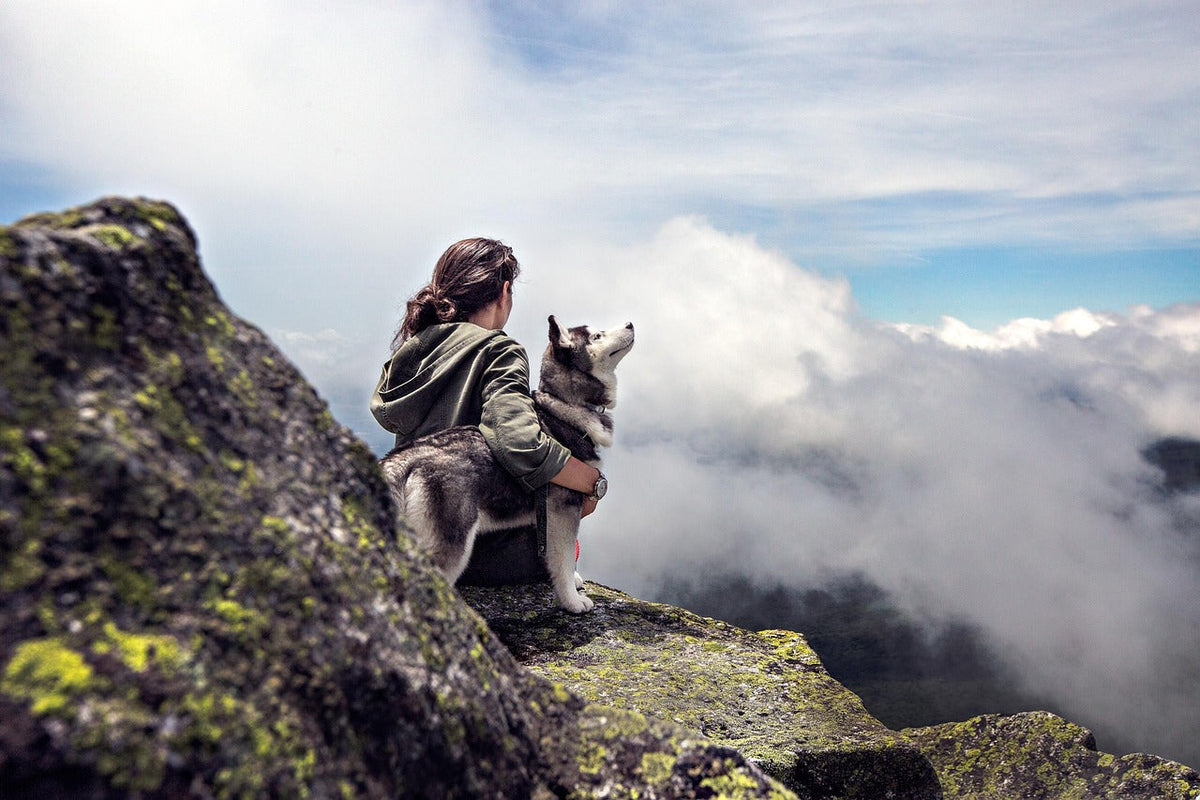
There was no single Viking dog. Archaeological finds show variation in size and build, from small dogs to medium-sized and large animals. Some may have displayed traits now associated with Nordic spitz dogs: a wedge-shaped head, upright ears, a dense coat and a tail carried over the back. Others may have looked quite different.

Ordinary skeletal remains do not reveal exact coat length or color. Ancient-DNA research may eventually answer more of these questions, but a dramatic image of a wolf-like dog is not evidence that every Viking Age dog looked that way.
For a comparison of modern northern and sled-dog types, see our guide to Husky breeds and northern dogs.
What were dogs used for in Viking Age communities?
A dog could perform several roles during its life. The same animal might be a useful worker and a close companion.
Hunting
Hunting supplied meat, hides and other materials. A dog’s nose, hearing and ability to locate, follow or hold game could be valuable. Different terrain and quarry would favor different sizes and working styles, but not every dog found in a grave was necessarily a hunting dog.
Herding and farm work
Livestock had to be moved, gathered and protected. Farm dogs may have helped with herding, alerting and everyday control around the homestead. The modern Norwegian Buhund illustrates how versatile a Nordic farm spitz can be, but it is not a living photograph of a dog from the year 900.
Guarding and alerting
A dog could notice unfamiliar people or animals before a person did. Guarding did not necessarily mean a dog bred to attack: barking, watchfulness and presence could provide an effective warning.
Companionship and status
Both small and large dogs appear in graves. In some elite burials, multiple animals formed part of an elaborate ritual and could represent the dead person’s status, identity or activities. Other finds—such as a small dog carefully placed at a woman’s feet—feel more personal.

Did the Vikings love their dogs—or only use them as tools?
The most likely answer is both. In preindustrial societies, animals commonly performed practical work without that excluding close emotional bonds. The modern divide between “pet” and “working animal” does not always fit the past.
In 2025, the Arctic University Museum of Norway presented a boat burial from Senja dated to approximately AD 900–950. A woman had been buried in the boat, with a small dog carefully placed at her feet. Researchers do not yet know what type of dog it was, but its position shows that it mattered within the burial. Read the museum’s account of the Senja boat grave.
Archaeology cannot prove a prehistoric emotional bond. However, complete dog burials, deliberate placement and the dogs’ presence in later stories make it reasonable to conclude that some relationships were more than purely practical.
Why were dogs placed in Viking graves?
Animals in graves could have several meanings. They may have represented companionship, power, identity, hunting, protection or assistance on a journey into the next world. The interpretation probably varied between people, places and periods.
At Skopintull on Adelsö in Sweden, the remains of at least 25 animals were found in a wealthy Viking Age cremation burial. They included three horses, seven dogs and several birds. The Swedish History Museum interprets the large number of animals and the birds of prey as evidence of high status and an elaborate funerary ritual. Explore the museum’s description of the Skopintull grave.
The Gokstad ship burial in Norway also contained several animals, including dogs. Such spectacular graves tell us a great deal about elite funerals, but they do not represent the everyday dog ownership of an entire society.
Did dogs travel on Viking ships?
Dogs could be transported by sea when people migrated, traded or established settlements. The historical link between Scandinavian dogs and Iceland demonstrates that dogs crossed the ocean. The Norwegian Kennel Club describes the Icelandic Sheepdog as descending from Nordic spitz-type dogs taken to Iceland by settlers from the late ninth century onward.
That does not mean dogs were standard crew on every raiding ship. Open vessels had limited space and sea journeys could be demanding. We have firmer grounds for saying that dogs were transported by ship than for inventing a universal “Viking ship dog.”

What role did cats have in the Viking Age?
Domestic cats lived in Scandinavian settlements and trading environments. One obvious role was catching mice and other small animals around food stores, homes and farms. Cats may also have been valued for companionship, fur or symbolic meaning, although practices would not have been identical everywhere.
Research into cat skeletons from Denmark found that Viking Age cats were smaller than modern Danish domestic cats. It is a useful reminder that the modern animal cannot simply be projected unchanged into the past. Read the peer-reviewed study in the Danish Journal of Archaeology.
Modern outdoor cats can still travel farther than their owners expect. Our guide to how far cats roam from home concerns present-day cats and should not be used to estimate the movements of Viking Age animals.
Did cats sail on Viking ships?
They may have done—and cats spread along maritime trade routes—but the claim needs careful wording. Research into ancient cat DNA found lineages far from their earlier ranges and drew attention to the role of seafaring and Viking-associated sites. Ships might have carried cats to control rodents, as transported domestic animals or even as accidental stowaways.
Genetic movement is not a passenger list. It does not prove that every longship carried a cat or that cats routinely joined raids. The safest conclusion is that cats could move through seaborne trade and settlement networks, while the scale and exact circumstances remain uncertain. Nature summarizes the ancient-DNA research into the spread of domestic cats.
Dogs and cats in Norse mythology
Animals also occupied an important place in Norse stories. The goddess Freyja is associated with a chariot drawn by two large cats. The Swedish History Museum also presents a small Viking Age cat figure carved from amber. Read the museum’s introduction to Freyja and her cats.
The dog Garmr is associated with the entrance to Hel, while other dogs appear in hunting and guarding roles. Much of the mythology was written down after the Viking Age, including in thirteenth-century Iceland. These texts can preserve and reshape older traditions, but they are not eyewitness records of dog breeds or everyday animal keeping around AD 900.
A popular claim: Freyja’s cats are often identified as Norwegian Forest Cats. The Old Norse sources do not name a modern breed. That identification is a later interpretation, not a documented Viking Age breed name.
Which modern dog is closest to a Viking dog?
No living dog is a time capsule from the Viking Age. Modern breeds have been shaped by recent selection, registration and genetic bottlenecks. Several Nordic breeds can nevertheless illustrate aspects of the appearance or work found among older northern dog types.
| Modern breed | Why it is relevant | What the evidence does not prove |
|---|---|---|
| Norwegian Buhund | A versatile Norwegian spitz used for herding, guarding and farm work. The Norwegian breed standard notes that small spitz-type dogs occur in Viking burials. | That every small spitz in a grave was a Norwegian Buhund, or that the modern breed is genetically unchanged from the Viking Age. |
| Icelandic Sheepdog | Described by the Norwegian Kennel Club as descending from Scandinavian spitz dogs brought to Iceland by settlers. Its farm, herding and alerting roles make it historically relevant. | That the standardized modern breed is identical to the first dogs taken to Iceland. |
| Norwegian Elkhound Grey | Its appearance and hunting work resemble older Nordic hunting-spitz types. | That it is a direct and unchanged descendant of “the Viking dog.” The Norwegian Kennel Club calls the simple ancient-ancestry story a myth and explains that the modern breed was formed in the nineteenth century. |
| Swedish Vallhund | A short-legged Swedish spitz used as a farm and cattle-herding dog. It illustrates another possible form of Nordic working dog. | That its exact origin in the Viking Age has been proven. |
| Norwegian Lundehund | A highly specialized Norwegian hunting spitz developed to retrieve puffins from steep coastal cliffs. Written descriptions of this form of hunting are more than 400 years old. | That the modern breed can be documented as an unchanged Viking Age dog. The written descriptions are centuries younger than the Viking Age. |

If the question is “Which one can I own today?”, the decision should be based on the breed’s current characteristics. Norwegian Buhunds can be energetic, vocal and highly willing to work. Icelandic Sheepdogs are active and social. Elkhounds may have strong hunting instincts, while the rare Lundehund has special health and breeding considerations. Historical appeal cannot replace a realistic assessment of exercise, training, health and daily life.
For official information, see the Norwegian Kennel Club’s material on the Norwegian Buhund, Icelandic Sheepdog, Norwegian Elkhound Grey and Norwegian Lundehund.
Is the Norwegian Forest Cat the closest living Viking cat?
The Norwegian Forest Cat is the most obvious modern Norwegian comparison. It developed from Scandinavian landrace cats and has a coat suited to a northern climate, but the formal breed and its written standard are modern.

There is no sound basis for identifying cats from Viking Age graves, farms or trading settlements as Norwegian Forest Cats in the modern sense. It is more accurate to describe the breed as a modern representative of Scandinavian landrace cats than as the Vikings’ proven shipboard cat.
Modern coat colors follow genetic patterns that cannot reveal a cat’s historical “breed.” Our guide to Calico and tricolor cats explains why Calico is a coat pattern rather than a breed.
Viking dogs and cats: myths and facts
| Claim | Assessment | A more accurate explanation |
|---|---|---|
| The Vikings had one special dog breed. | Misleading | They kept dogs of several sizes and types, long before modern breed standards existed. |
| The Norwegian Elkhound is exactly the same dog the Vikings kept. | Not demonstrated | The breed resembles older Nordic hunting spitzes, but its modern form was shaped through much later selective breeding. |
| Dogs were only tools. | Too simple | Dogs performed practical work, while complete burials and careful placement with people also point to social and symbolic importance. |
| Every Viking ship had a cat to catch mice. | Not proven | Cats spread along maritime routes, but we do not know which individual ships carried them. |
| Freyja’s cats were Norwegian Forest Cats. | A later interpretation | The sources mention cats but do not identify a modern breed. |
| Animals in Viking graves can reveal status and belief. | Well supported | The animals selected and their placement show that they could form part of identity, ritual and ideas about death. |
What can Viking Age animals teach us?
The clearest lesson is that usefulness and affection are not opposites. A dog could hunt, herd and alert—and still be important enough to be placed at a person’s feet in a grave. A cat could reduce rodents around stored food while also appearing in objects and mythology.
The story becomes less sensational when claims about “pure Viking breeds” are removed, but it becomes more human. Animals were not background decoration. They participated in work, migration, trade, ritual and everyday life.
For more surprising information about the animals living with us today, explore our collection of fascinating dog facts.
Frequently asked questions about Viking dogs and cats
What kind of dogs did the Vikings have?
There was no single Viking dog. Archaeological remains show dogs of different sizes and builds. Some probably resembled Nordic spitz types and may have been used for hunting, herding, guarding or companionship.
What was the Viking dog breed called?
There is no single documented breed name equivalent to a modern “Viking dog.” Modern breeds and formal standards were established much later.
Is the Norwegian Buhund a Viking dog?
The Norwegian Buhund is a modern breed whose appearance and work fit the idea of a Nordic farm spitz. Small spitz-type dogs occur in Viking burials, but that does not mean every such dog was today’s Buhund.
Is the Norwegian Elkhound a Viking dog?
Not in the sense of an unchanged breed with a documented direct line. The Norwegian Elkhound Grey resembles older Nordic hunting spitzes, but the Norwegian Kennel Club explains that the modern breed was formed through selective breeding in the nineteenth century.
Is the Norwegian Lundehund a Viking dog?
That has not been demonstrated. It is an old and highly specialized Norwegian hunting spitz, and descriptions of puffin hunting with dogs are more than 400 years old. Those written sources are still centuries younger than the Viking Age.
Did the Vikings take dogs to Iceland?
Yes. Dogs accompanied Nordic settlers. The Icelandic Sheepdog is described as descending from Scandinavian spitz-type dogs brought to Iceland from the late ninth century onward.
Were dogs kept aboard Viking ships?
Dogs had to travel by sea during migration and settlement, but there is no evidence that they were permanent crew on every trading or raiding vessel.
Did the Vikings have cats?
Yes. Archaeological finds and ancient-DNA research show domestic cats in and around Scandinavian communities during the Viking Age.
Did Viking Age cats catch mice?
Rodent control is a likely role around farms, food stores and trading places. Cats may also have been valued for companionship, fur or symbolism, with local practices varying.
Were cats taken on Viking ships?
Cats could travel by ship and spread along maritime routes. The evidence does not show that every Viking vessel had a cat aboard.
Were Freyja’s cats Norwegian Forest Cats?
There is no evidence for that identification. The Norse stories describe cats drawing Freyja’s chariot but do not provide a modern breed name.
Why were dogs buried with people?
Dogs could represent companionship, status, hunting, protection or ideas about the journey after death. The meaning probably differed from one burial to another.
Which modern dog looks most like a Viking dog?
The Norwegian Buhund, Icelandic Sheepdog, Norwegian Elkhound, Swedish Vallhund and Norwegian Lundehund are relevant Nordic comparisons. Choose a dog for its present-day health, temperament and needs—not only for a historical appearance.
Sources and further reading
This article distinguishes archaeological finds, later literature and modern breed history. The following sources provide the main evidence:
- The Arctic University Museum of Norway: a woman and her dog in the Senja boat burial.
- Swedish History Museum: the Skopintull burial and animals in Viking funerary ritual.
- Museum of Cultural History, University of Oslo: Gokstad Revitalised.
- University of Oxford: research into dogs in Old Norse literature.
- Norwegian Kennel Club: Norwegian Buhund breed standard and history.
- Norwegian Kennel Club: Icelandic Sheepdog history.
- Norwegian Kennel Club: Norwegian Elkhound Grey and myths about ancient ancestry.
- Norwegian Kennel Club: Norwegian Lundehund breed standard and historical background.
- Swedish Kennel Club: Swedish Vallhund.
- Nature: ancient DNA and the historical spread of domestic cats.
- Danish Journal of Archaeology: body-size change in Danish domestic cats since the Viking Age.
- Swedish History Museum: Freyja, her cats and the Viking Age amber figure.
- Fédération Internationale Féline: Norwegian Forest Cat.
Sources reviewed and article updated September 2026. New archaeological and genetic research may change parts of this picture.
Share:
How Far Do Cats Roam From Home? Distance, Territory and Safety