
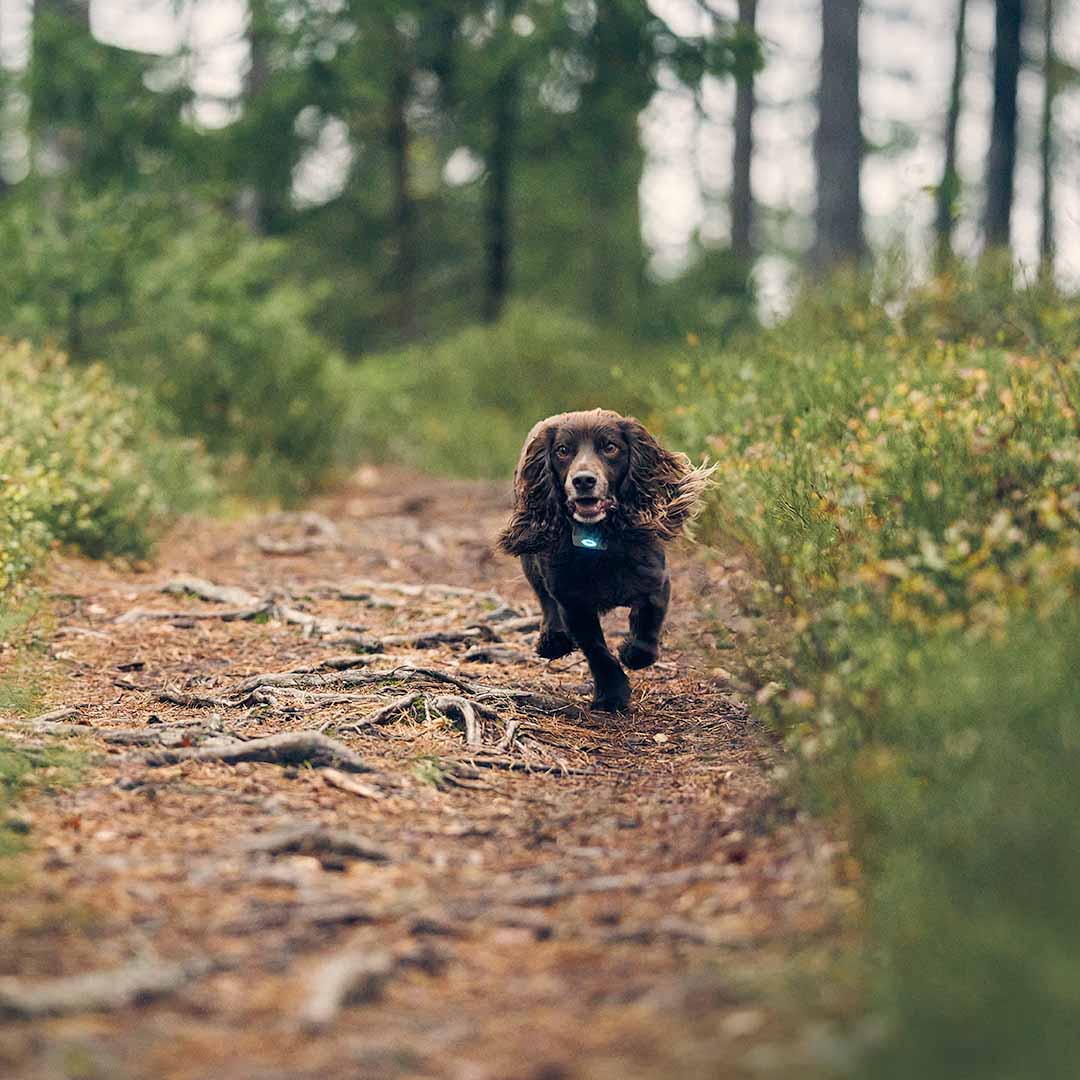
One moment you are walking together. The next, your dog is out of sight. You call, listen and feel your pulse rising. Should you run after them? Wait? Call someone?
If your dog runs away, avoid chasing them, mark the last confirmed location and organise help early. What you do next depends particularly on whether your dog is still responding to you, has been frightened or may be injured.
This happening does not make you a bad dog owner. Right now, you need a plan. This guide helps you decide what to do next, whether your dog disappeared moments ago or has been missing for some time.
Is your dog missing right now? Start here
- Avoid running after your dog or calling repeatedly. A frightened dog may keep fleeing when someone follows.
- Mark the last confirmed location. Note the time, direction of travel and what happened. Drop a pin on your phone's map.
- Assess nearby dangers. Traffic, water, steep drops and extreme weather affect how urgently you need help.
- Call one person who can help. Divide the tasks: watching the area, collecting sightings and notifying others.
- Report your dog missing. Contact the local service responsible for lost dogs, notify your microchip registry and alert nearby veterinary practices and relevant community groups.
Contact the emergency services if there is an immediate threat to human life or safety. For a routine missing-dog report, use the appropriate local animal service or non-emergency contact. The responsible service and telephone number vary by country.
The first few minutes: get your bearings before setting off
It is easy to start running in the direction your dog disappeared. Before moving far, take a brief moment to gather what you actually know.
- Where and when did you last see your dog?
- Did they follow a scent or another animal, or flee from something frightening?
- Were they trailing a lead or long line?
- Are there roads, water, fences or difficult terrain nearby?
- Is your dog already wearing an active GPS tracker?
These details help you decide where to look and what to tell the people helping you. If your dog has a tracker, check both the location and the time of the last update. An old position shows where your dog was, not necessarily where they are now.

Should you run after your dog or stay where you are?
Avoid chasing your dog. However, there is no rule that you should always stand still and wait. Consider how your dog is reacting, where they disappeared and what dangers are nearby.
If your dog can still see you and seems relaxed
Try your usual recall cue in a calm, friendly voice. Reward your dog if they come back. In a safe area, moving away and inviting your dog to follow can work better than running towards them.
Avoid calling repeatedly if your dog does not respond. If they move away or seem frightened, change your approach.
Have these things ready before you start searching
Take a charged phone, a lead or harness, water and a few treats. Give your telephone number to anyone helping. If several people are involved, agree who will stay near the last confirmed location and who will follow up sightings. Let others know before changing areas so you do not end up looking for one another too.
If your dog is frightened or fleeing from people
Stop. Do not run after your dog, walk straight towards them or try to surround them. Even a dog who normally comes when called may react differently when very frightened.
The Missing Animal Response Network's advice on frightened, loose dogs explains that calling and persistent approaches can cause a scared dog to flee again. The aim is to give your dog space to approach rather than put them under pressure.
If your dog is out of sight
Keep the last confirmed location as a reference point. If you have help, one person can watch there while others check likely areas and collect sightings. If you are alone, record the location before moving.
Do not base the entire search on the assumption that your dog will return. New, reliable sightings and specific hazards should guide your next steps.
Who should you contact when your dog is missing?
You do not have to wait until you have been searching for hours. Notify the relevant services early. If possible, ask a helper to handle calls and missing-dog notices while you follow up the area.
The local service responsible for lost dogs
Depending on where you are, this may be animal control, a council dog warden, a municipal animal service or the police. Report your dog missing and ask whether a matching dog has been found or reported. Provide the last confirmed location, time, identifying features and your telephone number. Be clear if your dog has been seen in traffic.
Your microchip registry: report the dog missing and check your details
Contact the database where your dog's microchip is registered. Check that your telephone number is current and use its missing-pet service if available. A microchip can help identify the owner when a found dog is scanned.
Veterinary practices and local animal welfare organisations
Notify nearby veterinary practices. Someone who finds your dog may take them there for treatment or a microchip scan. Local rescue organisations or experienced missing-pet groups may also offer advice and knowledge of the area, although their capacity varies.
Local groups and people in the area
Share a clear missing-dog notice in relevant local groups. Alert neighbours, property owners and others who may have seen your dog. Ask for sightings rather than encouraging everyone to try to catch them.
What to include in a missing-dog notice
- A clear, recent photograph.
- Your dog's size, colour and distinctive features.
- The place and time of the last confirmed sighting.
- Whether your dog is wearing a collar, harness or trailing a lead.
- The telephone number of one contact person.
- The instruction: “Do not chase or try to catch the dog. Call with the location, time and direction of travel.”
Update the same notice with new information and mark it clearly when your dog has been found.
A missing-dog notice you can copy
MISSING DOG – [location] [Name] was last definitely seen at [location] at [time] on [date]. Description: [size, colour and distinctive features]. Wearing [collar, harness or lead]. The dog may be frightened. Please do not chase, call out or try to catch them. Call [telephone number] with the exact location, time and direction of travel. Latest update: [most recent confirmed information].
Attach a clear photograph and make sure the location will be understandable to people who do not know the local walking route.
How do you search for a missing dog?
An effective search needs coordination. Agree who will collect tips and record sightings with their time and location. This helps distinguish new information from old reports being shared again.
Use one contact person and a simple sightings log
Ask anyone who sees your dog to call one contact person. Record when the sighting actually happened, not just when the message arrived. Ask whether the person saw the dog themselves, where the dog was and which way they were moving. A photograph from a distance can help if it can be taken without following the dog.
| Record | Example |
|---|---|
| Time of the sighting | 2:10 pm, rather than simply “a while ago”. |
| Exact location | A map pin, address or clear landmark. |
| Direction of travel | Along the path towards the car park. |
| The dog's behaviour | Walking calmly, running, limping or avoiding people. |
| Who made the sighting | A name and telephone number for follow-up. |
Separate confirmed sightings from possible leads. A forwarded message might concern another dog or an old sighting. Redirect the search when better information arrives instead of having everyone continue wherever they happened to start.
In towns and cities: follow up sightings and traffic risks
Ask people nearby to keep watch and report sightings. With the owner's permission, check likely hiding places and places where your dog might have been shut in, such as courtyards and garages.
Do not run into the road after your dog or try to stop traffic yourself. Report dangerous situations to the police. If someone sees your dog, ask them to keep their distance and report where the dog is heading.
In woodland and hills: consider whether your dog is moving or might be trapped
Note paths, terrain and the last confirmed direction. A trailing lead, a recent fall or repeated tracker positions from the same area may give you reason to check whether your dog is trapped or injured. A stationary map marker can also mean the position has not updated, so check its timestamp.
Avoid large groups shouting and driving a frightened dog through the landscape. If repeated sightings suggest your dog is fleeing from people, ask someone experienced in missing-dog recovery to help plan the search.
Check places where your dog could have been shut in
Your dog may not have travelled far. Ask people to check sheds, outbuildings, garages and enclosed spaces. Do not enter someone else's property without permission.

How to use GPS when your dog has run away
If your dog is wearing an active tracker, the map can give you a specific place to start. With a Lildog GPS tracker for dogs, you can follow your dog's location and see their location history in the app. During a search, it is particularly useful to consider this information alongside the terrain and the latest sightings.
Check the time, not just the dot
Start by checking when the position was recorded. A recent position and one from before your dog disappeared give you different starting points. If the marker is not moving, check whether you are actually receiving new updates before assuming your dog is staying still.
Use location history to understand the direction of travel
Several consecutive positions can tell you more than one marker. Look for signs that your dog is following a road, heading back towards familiar surroundings or remaining near the same place. Share the latest location and time with helpers and update them as new information arrives.
Approach calmly when you get closer
Even if you know roughly where your dog is, they may be frightened or difficult to see. Stop at a safe distance, look for your dog and assess their reaction before approaching. Let one person try to make contact rather than having several people approach from different directions.
To understand what affects map positions and updates, read our guide to how GPS tracking for dogs works. Tracking depends on factors including battery power and available signals. Use it together with sightings from the area.
If your dog is missing overnight or for several days
As the first few hours pass without a result, it is easy to lose track of what has been checked. Keep one updated log covering the last confirmed sighting, who has searched where and which leads still need investigating. Arrange shifts or tasks so someone can follow up new information while others rest.
Update missing-dog notices with the date and time. Ask people to keep reporting sightings even if they only saw your dog briefly. Check whether nearby veterinary practices, shelters or other receiving services have taken in a dog matching the description.
If your dog is repeatedly seen but will not allow anyone to approach, seek help from people experienced in searching for and safely recovering missing dogs. Agree on a coordinated approach before several people independently try to lure or catch the dog. Stay away from dangerous terrain and traffic, even when you feel under pressure to act quickly.
When you need to hand the search over to someone else
Give a short handover: the last confirmed location and time, your dog's reaction to people, known hazards and who is collecting sightings. Make sure someone can reach you. An organised search is easier to continue than several separate conversations with no shared overview.
You can see your dog again. What should you do?
It is tempting to rush over when you finally spot your dog. Instead, take a moment to observe their reaction.
- Are they approaching you willingly? Greet them calmly, reward them and attach the lead without sudden movements.
- Do they stop, move away or seem frightened? Keep your distance. Avoid staring or walking straight towards them. Turn slightly sideways and sit down calmly if it is safe to do so.
- Are they moving away? Do not turn it into a chase. Note the direction and update the person coordinating the search.
Food may help encourage your dog closer, but do not pressure them or suddenly grab their collar. A dog who will not allow anyone to approach may need a planned recovery with experienced help. Do not improvise traps or set them without competent guidance and supervision.
Once your dog is safely secured, let yourself feel the relief. Scolding will not help prevent another escape.
Why do dogs run away?
A dog may disappear because something is more appealing than returning when called, or because they want to escape something frightening. Understanding the difference helps during the search and when planning prevention.
- Fear: Fireworks, thunder or a sudden incident can trigger flight.
- Chasing and scents: Another animal or an interesting trail can draw their attention away from you.
- Exploration: An open gate or door creates an opportunity.
- Unfamiliar surroundings: On holiday, away from home or after moving, your dog may not know the area.
- Other dogs: Social interest and a female dog being in season can encourage dogs to seek one another out.
The Missing Animal Response Network explains how behaviour and circumstances influence a missing-dog search. Use this to help assess your own dog's situation rather than assuming every dog follows the same pattern.
A young age and limited training can make recall harder, but adult, well-trained dogs can also run away. If loud noises are a trigger, read our advice on keeping your dog safer and calmer during fireworks.
How long can a dog survive without food and water?
There is no safe time limit you can use as a reason to delay searching. Water availability, temperature, health, age and activity all affect the risk. Your dog could also be injured or trapped even after a short time away.
Heat and exertion can cause dangerous overheating. Cold conditions and a wet coat can also make the situation serious. Step up efforts when conditions are difficult, and tell helpers if your dog is a puppy, elderly, unwell or needs medication.
If you suspect overheating, contact a local vet or emergency veterinary clinic immediately and follow their instructions.
When your dog is home again
Secure your dog with a lead and give them a quiet place to settle. Offer water and check for wounds, limping or other signs that something is wrong.
For breathing difficulties, collapse, obvious pain, suspected vehicle injuries or overheating, contact a vet immediately and agree how to bring your dog in. Seek veterinary advice for other signs of injury too. A dog who has been missing for a long time or seems exhausted or unwell should also be assessed by a vet. Follow the vet's advice about transport, water and food if your dog appears ill or severely weakened.
Close missing-dog reports with the microchip registry and other services, update your notices and notify the authorities and people who helped. This prevents people from continuing to search or follow up old sightings.
How can you stop your dog running away again?
Start with what actually happened. Did your dog slip out of the harness? Was a gate left open? Did they chase another animal? The solution should address the cause.
Check leads, harnesses, gates and doors
Check fit and wear. A harness that looks secure when your dog moves forwards may fit poorly when they reverse. Agree who is watching your dog when doors and gates are opened.
Practise recall in situations where your dog can succeed
Start with few distractions and reward generously. Use a long line in suitable areas when you need safety during training. Increase difficulty gradually instead of testing recall off lead in a situation your dog is not ready for.
Practise everyday situations too, such as opening the car door, garden gate and front door. Tell dog sitters which situations are difficult and show them how to fasten the harness and lead. In a new place, start with short, calm walks on lead and check the boundaries before letting your dog loose in the garden.
If your dog repeatedly escapes, ask a qualified, reward-based dog trainer to assess the situations and help you develop a plan.
Keep identification up to date
A microchip with current owner details makes it easier to contact you when your dog is found. An ID tag with your telephone number allows a finder to reach you quickly without first finding a microchip scanner.
Set up tracking before you need it
A tracker is most useful when it is already attached to your dog, charged and familiar to anyone looking after them. Check that you can find the location in the app, inspect the attachment and get to know location history on ordinary walks. That way, you will not be learning the features for the first time during a search.
A Lildog GPS tracker for dogs combines location tracking and activity information in the app. If you are comparing tracking devices, read about the difference between AirTag and a GPS tracker for dogs. A microchip, a telephone number on the collar and GPS serve different purposes and can complement one another.

Frequently asked questions when a dog runs away
Will my dog come home on their own?
Some dogs find their way back, but you cannot rely on it. Unfamiliar terrain, fear, traffic and injuries can prevent a return. Start reporting your dog missing and organise a search rather than simply waiting.
How far can a dog travel after running away?
There is no single distance that applies to every dog. The reason they disappeared, the terrain and their condition all affect their movements. Use confirmed sightings to adjust the search area.
Can I track my dog with a microchip?
No. A standard identification microchip does not transmit a GPS position. A scanner reads it so the dog can be identified and registered owner details checked.
Should I punish my dog when they return?
No. Greet your dog calmly and secure them. You want returning to you to feel safe. Prevent the next incident through suitable equipment, management and training.
What should I do if my dog has been missing overnight?
Continue the search and update your notices. Collect sightings in one place, contact veterinary practices and follow up possible matches. If your dog is being seen but avoids people, seek help from someone experienced in recovering frightened dogs.
What should I do if I find a loose dog?
Do not chase the dog or put yourself in danger. If you can secure them calmly, look for visible contact details and contact the local service responsible for stray dogs. A veterinary practice can scan for a microchip. If the dog flees, report the location, time and direction of travel.
Where should I report my dog missing?
Contact your local animal control service, council dog warden or other responsible authority, notify the microchip registry and alert nearby veterinary practices and relevant local groups. Have a photograph, identifying details and the last confirmed location ready. Update reports when your dog has been found.
The GPS keeps showing the same place. Does that mean my dog is trapped?
Not necessarily. Check whether the timestamp is changing. An old position can remain on the map when new data is not arriving. Fresh positions from the same area may be a reason to check the location, particularly if your dog is trailing a lead or could be injured.
Why won't my dog come to me when they can see me?
A frightened dog may avoid even familiar people. Do not chase them or pressure them into a corner. Keep your distance, assess their reactions and seek help with a calm approach if they continue to flee.
Share:
GPS trackers vs Bluetooth trackers – what's the difference?
5G and Radiation: Are Mobile Networks and GPS Trackers Safe for Dogs?