
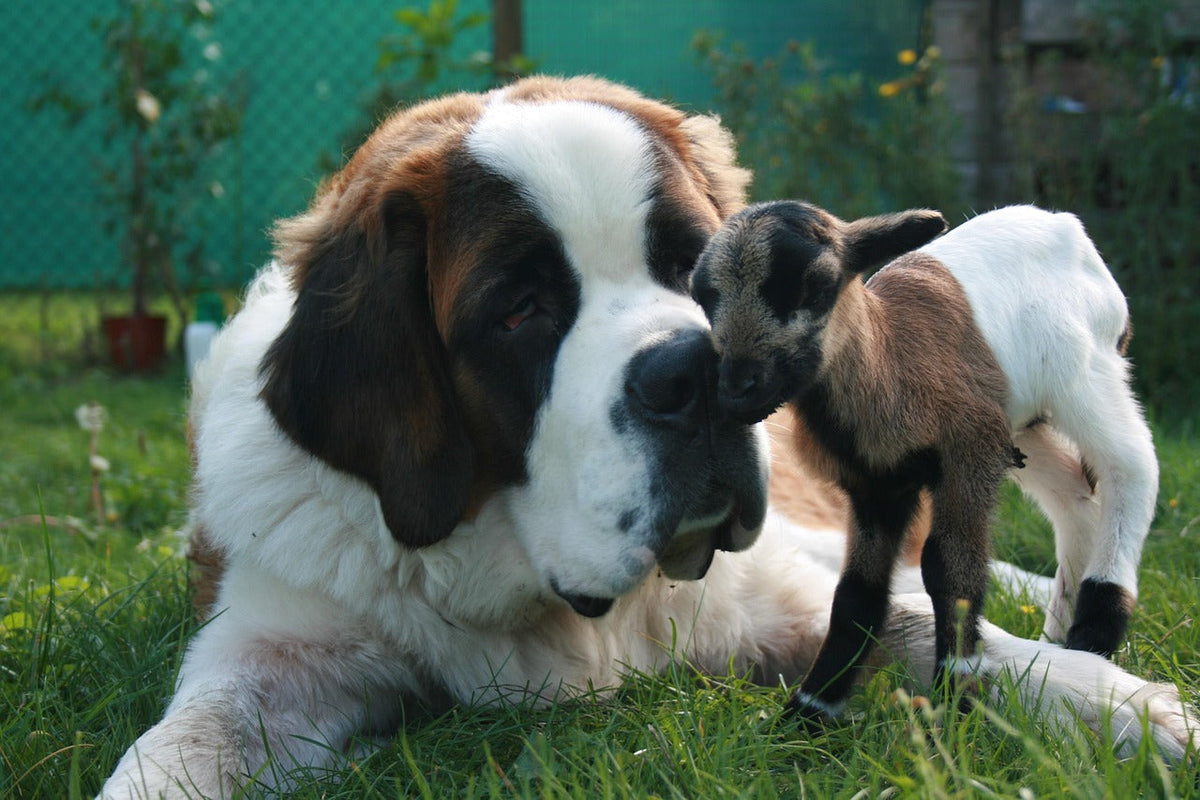
Saint Bernard Dog – Everything About Size, Puppies, Health and Temperament
The Saint Bernard is one of the world's most famous dog breeds. With its enormous size, friendly personality and fascinating history as an Alpine rescue dog, this breed has impressed people for generations. Behind its massive appearance lies a calm, affectionate and family-oriented companion that thrives when close to its people.
But how big does a Saint Bernard actually get? How much food does it eat? What does it cost to own a dog that can weigh as much as an adult human? And is this breed suitable for every family? In this complete guide, you'll learn everything you need to know about the Saint Bernard—from its history and size to puppyhood, health and everyday care.
Saint Bernard Facts
| Origin | Switzerland |
| FCI Group | Group 2 – Pinschers, Schnauzers, Molossoids and Swiss Mountain Dogs |
| Male Height | 70–90 cm (27.5–35.5 in) |
| Female Height | 65–80 cm (25.5–31.5 in) |
| Weight | 60–90 kg (132–198 lbs) or more |
| Lifespan | 8–10 years |
| Coat | Short-haired or long-haired variety |
| Shedding | High |
| Activity Level | Moderate |
| Family Dog | Yes |
| Suitable for First-Time Owners | Potentially, with proper preparation |
The Saint Bernard is one of the largest dog breeds in the world. Despite its impressive size, the breed is known for its calm temperament, patience and strong desire to be part of the family. Many owners describe the Saint Bernard as a true giant with a remarkably gentle heart.
History and Origin
The history of the Saint Bernard begins in the Swiss Alps at the Great St. Bernard Pass, a mountain route that served as an important connection between Switzerland and Italy for centuries. The area was notorious for severe snowstorms, deep snowdrifts and dangerous avalanches.
In the 11th century, monks established a hospice in the region to help travellers crossing the mountains. Over time, they began breeding large, powerful and intelligent dogs capable of assisting with rescue work.
These dogs were used to:
- locate missing travellers during snowstorms
- find people buried in avalanches
- transport equipment through difficult terrain
- alert the monks when people needed help
For centuries, these dogs became legendary rescue workers. Although some stories have been romanticized over time, there is no doubt that Saint Bernards helped save many lives in the Alps.
Today, the breed is rarely used for mountain rescues, but its calm temperament, strength and loyalty continue to make it a popular family companion around the world.

How Big Does a Saint Bernard Get?
You only truly understand the size of a Saint Bernard when standing next to a fully grown adult. This is not merely a large dog—it is one of the largest dog breeds in the world. An adult male can stand up to 90 cm (35.5 inches) at the shoulder and weigh well over 80 kilograms.
Typical measurements include:
- Male: 70–90 cm and 65–90+ kg (143–198+ lbs)
- Female: 65–80 cm and 55–80 kg (121–176 lbs)
Some individuals grow even larger. It is not uncommon for exceptionally large males to exceed 90 kilograms when fully mature.
The breed’s massive size affects everyday life in many ways. A Saint Bernard requires more living space than most breeds, a larger bed, a larger crate and significantly more food than the average dog.
At the same time, its impressive size is one of the reasons so many people admire the breed. Enthusiasts of giant dog breeds often consider the Saint Bernard one of the most remarkable dogs in the world.
If you're fascinated by giant dogs, be sure to check out our upcoming guide to the world's largest dog breeds.
See the Saint Bernard in Action
The Saint Bernard is famous for its calm nature, enormous size and friendly personality. Watch the video below to see the breed in motion and gain a better understanding of how it behaves in everyday life.
How Much Does a Saint Bernard Eat?
One of the largest ongoing expenses of owning a Saint Bernard is food. Since these dogs typically weigh between 60 and 90 kilograms, they naturally require far more calories than smaller breeds.
Food consumption varies depending on age, activity level, health and diet quality. An adult Saint Bernard often eats between 600 and 1,000 grams of dry food per day, while especially active individuals may require even more.
With high-quality food formulated for large breeds, monthly feeding costs commonly range between NOK 800 and NOK 2,000. Some dogs may cost more if they require special diets or veterinarian-recommended nutrition plans.
Puppies have unique nutritional requirements and should be fed puppy food specifically designed for large and giant breeds. Proper nutrition during growth is essential for healthy development of bones, muscles and joints.
A high-quality diet is an investment that can improve health and quality of life throughout the dog's lifetime.
Veterinary Expenses and Other Costs
Many owners are surprised by how much a dog's size influences veterinary expenses. A Saint Bernard requires larger doses of medication, more anesthesia and often larger medical equipment than smaller dogs.
As a result, certain procedures and surgeries can be considerably more expensive.
Common expenses include:
- annual veterinary checkups
- vaccinations and health screenings
- parasite prevention and treatment
- dental care
- hip and elbow X-rays
- emergency treatment for illness or injury
Pet insurance is highly recommended for giant breeds. Premiums are often higher than for smaller dogs, but insurance can save owners significant costs if their dog becomes ill or injured.
Additional expenses include large dog beds, harnesses, travel crates, vehicle crates and other oversized equipment. These costs are frequently underestimated by first-time owners considering the breed.
Appearance and Breed Characteristics
The Saint Bernard is one of the most impressive dog breeds in the world. Its powerful build, large head and friendly expression make it instantly recognizable, even to people with little experience around dogs.
The body is massive and muscular without appearing sluggish or clumsy. The breed was developed for strength, endurance and stability—qualities that were essential when working in the demanding Alpine environment.
Typical breed characteristics include:
- large and broad head
- powerful neck and deep chest
- strong, muscular body
- friendly dark eyes
- drooping ears
- long, heavy tail
Saint Bernards come in both short-haired and long-haired varieties. Both coat types share the same general characteristics, although the long-haired variety requires somewhat more grooming throughout the year.
The classic color pattern consists of white and reddish-brown markings, often combined with darker markings around the eyes. This is the appearance most people associate with the breed.

Temperament and Personality
Despite its intimidating size, the Saint Bernard is famous for its gentle and calm temperament. Many people describe the breed as a “gentle giant,” and that description is often highly accurate.
The breed is generally:
- calm
- friendly
- patient
- family-oriented
- loyal
- stable and dependable
A well-socialized Saint Bernard is rarely nervous or overly reactive. Most individuals prefer to observe unfamiliar situations before responding, and many have a remarkable ability to remain calm even when there is plenty of activity around them.
This is not a dog that constantly demands attention or entertainment, but it does want to be part of family life. Many Saint Bernards quietly follow their owners from room to room and are happiest when resting close to their people.
The breed's strong attachment to its family also means it generally does not enjoy being left alone for long periods.
Saint Bernard as a Family Dog
For many owners, the Saint Bernard’s family-friendly nature is one of the breed’s greatest strengths. Over generations, it has earned a reputation as a dependable and affectionate companion.
Owners often describe their Saint Bernard as:
- loving and affectionate
- highly people-oriented
- calm indoors
- predictable and steady
- fond of physical closeness
Most Saint Bernards are happiest when they can spend plenty of time with their family. They do not necessarily need to be the center of attention, but they like knowing where their people are and being included in everyday activities.
Because of their size, however, realistic expectations are important. A dog weighing 80 kilograms (176 pounds) requires substantial space, large resting areas and room to move comfortably around the home.
For families with sufficient space and time, the Saint Bernard can be an exceptionally loyal and harmonious companion.
Saint Bernards and Children
The Saint Bernard is well known for its patience and calm demeanor around children. This is one of the reasons the breed is frequently recommended as a family dog.
Many individuals display impressive tolerance toward children's games and activities. They often remain composed even in busy households and are not easily disturbed by normal family noise.
That said, owners should never forget the dog's enormous size. An excited Saint Bernard can easily knock over a small child without intending any harm.
For safe interactions:
- children should learn to respect the dog's boundaries
- all interactions with young children should be supervised
- the dog should have a quiet resting area of its own
- children should learn basic canine body language
When both children and dogs learn how to interact respectfully, strong bonds often develop and last throughout the dog's lifetime.
Training and Obedience
The Saint Bernard is intelligent and capable of learning quickly, but it rarely has the same intense drive to perform as some working breeds. Many owners describe the breed as thoughtful, independent and occasionally stubborn.
Saint Bernards respond best to:
- positive reinforcement
- clear routines
- calm training sessions
- consistent rules
- patient guidance
Early training is especially important because of the breed's eventual size. A puppy that pulls slightly on the leash may seem harmless, but the same behavior from an adult dog weighing more than 80 kilograms can be difficult to manage.
For this reason, basic skills such as recall, leash manners, handling exercises and calm behavior should be taught from an early age.
The goal is not necessarily to create a competitive performance dog, but rather a reliable family companion that behaves confidently and politely in everyday situations.
Exercise and Activity Level
Despite its history as a working dog, the Saint Bernard is much calmer than many people expect. This is not a breed that requires several hours of intense exercise every day.
Regular physical activity remains important, however, for maintaining health and preventing obesity.
Most Saint Bernards enjoy:
- daily walks
- relaxed hikes in nature
- simple scent games
- nose work activities
- mental enrichment at home
Extra caution is needed during hot weather. The breed's large body size and thick coat make many Saint Bernards more vulnerable to overheating than smaller breeds.
Puppies should also be protected from excessive physical strain. Long-distance running and high-impact exercise can place unnecessary stress on developing bones and joints.
The ideal lifestyle for a Saint Bernard usually combines moderate exercise with plenty of rest and close family companionship.
Saint Bernard Puppy
A Saint Bernard puppy stays small for only a very short time. Growth during the first months is often remarkable, with many puppies gaining several kilograms every month. What begins as a cute and clumsy puppy quickly develops into one of the largest dog breeds in the world.
This rapid growth makes puppyhood especially important. Proper nutrition, controlled exercise and thorough socialization lay the foundation for a healthy adult dog.
A Saint Bernard puppy should receive:
- puppy food formulated for large and giant breeds
- gradual socialization with people and other animals
- calm and positive training sessions
- plenty of sleep and rest
- controlled exercise without excessive physical strain
Many owners make the mistake of exercising giant-breed puppies too intensely. Because bones and joints are still developing, long-distance running, frequent jumping and strenuous activities should be limited during the growth period.
A properly socialized puppy often grows into the stable, calm and dependable family companion for which the breed is famous.
Grooming and Shedding
The Saint Bernard has a thick coat developed to protect it from cold temperatures, snow and harsh weather conditions. The breed comes in both short-haired and long-haired varieties, and both require regular grooming.
Saint Bernards shed heavily throughout the year. During seasonal coat changes in spring and autumn, the amount of loose hair can be surprising.
To maintain a healthy coat, it is recommended to:
- brush the coat several times per week
- increase grooming during heavy shedding periods
- check regularly for tangles and mats
- inspect ears and paws routinely
- bathe when necessary
The long-haired variety generally requires more maintenance than the short-haired version. Regular brushing helps prevent matting while removing loose hair.
Many Saint Bernards also drool significantly. The amount varies from dog to dog, but towels near water bowls and occasional extra cleaning are realities many owners quickly accept.
Health and Lifespan
The Saint Bernard is generally a sturdy and resilient breed. However, its massive size increases the risk of certain health conditions that are more common in giant breeds than in smaller dogs.
The most common health concerns include:
- hip dysplasia
- elbow dysplasia
- heart disease
- eye disorders
- obesity
- gastric dilatation-volvulus (bloat)
Bloat (Gastric Torsion)
Bloat is a serious medical emergency that can affect many large and giant breeds. The condition requires immediate veterinary treatment and can be fatal if left untreated.
The risk may be reduced by:
- feeding multiple smaller meals throughout the day
- avoiding intense exercise immediately before and after meals
- maintaining a healthy body condition
Joint Health and Weight Management
The breed's heavy body weight places considerable stress on the hips, elbows and other joints. Proper nutrition, controlled growth during puppyhood and maintaining a healthy weight throughout life are therefore particularly important.
When purchasing a puppy, choose a reputable breeder who performs appropriate health testing and actively works to reduce the occurrence of inherited diseases.
What Does a Saint Bernard Cost?
The purchase price of a puppy is only a small portion of the total cost of owning a Saint Bernard. The breed's large size affects nearly every expense throughout its lifetime.
Common ownership costs include:
- purchasing a puppy from a reputable breeder
- pet insurance
- food
- veterinary care
- beds, harnesses and other equipment
- vehicle crates and transportation solutions
- boarding or pet-sitting when required
Large dog breeds generally require more resources than smaller breeds. Nevertheless, many owners consider the investment worthwhile because of the exceptional loyalty and affection they receive in return.
Frequently Asked Questions About the Saint Bernard
How big does a Saint Bernard get?
Adult males typically stand between 70 and 90 cm (27.5–35.5 inches) tall and may weigh more than 90 kg (198 lbs). Females are usually somewhat smaller.
Is the Saint Bernard a good family dog?
Yes. The breed is known for being calm, patient, loyal and highly affectionate toward people.
How much does a Saint Bernard eat?
An adult Saint Bernard commonly eats between 600 and 1,000 grams of dry food per day, depending on age, size and activity level.
How long do Saint Bernards live?
The average lifespan is generally between 8 and 10 years.
Do Saint Bernards shed a lot?
Yes. The breed sheds heavily, particularly during seasonal coat changes in spring and autumn.
Are Saint Bernards good with children?
Many Saint Bernards are excellent with children, but interactions should always be supervised because of the dog's large size.
Do Saint Bernards drool a lot?
Many do, although the amount varies considerably between individuals.
Is the breed suitable for first-time owners?
Yes, provided owners are prepared for the breed's size, costs and responsibilities.
Quiz: How Much Do You Know About the Saint Bernard?
1. Which country did the Saint Bernard originate from?
Show answer
Switzerland.
2. How much can an adult male Saint Bernard weigh?
Show answer
Often between 65 and 90 kg (143–198 lbs) or even more.
3. What was the breed originally used for?
Show answer
Mountain rescue work in the Alps.
4. Which serious health condition can affect the breed?
Show answer
Gastric dilatation-volvulus (bloat).
5. What is the typical lifespan of a Saint Bernard?
Show answer
Approximately 8–10 years.
Share:
Veterinarian Trude Mostue: New Year’s Eve with a Dog – How to Keep Your Dog Safe, Calm and Comfortable
GPS tracker battery life for dogs and cats: Get more from each charge