
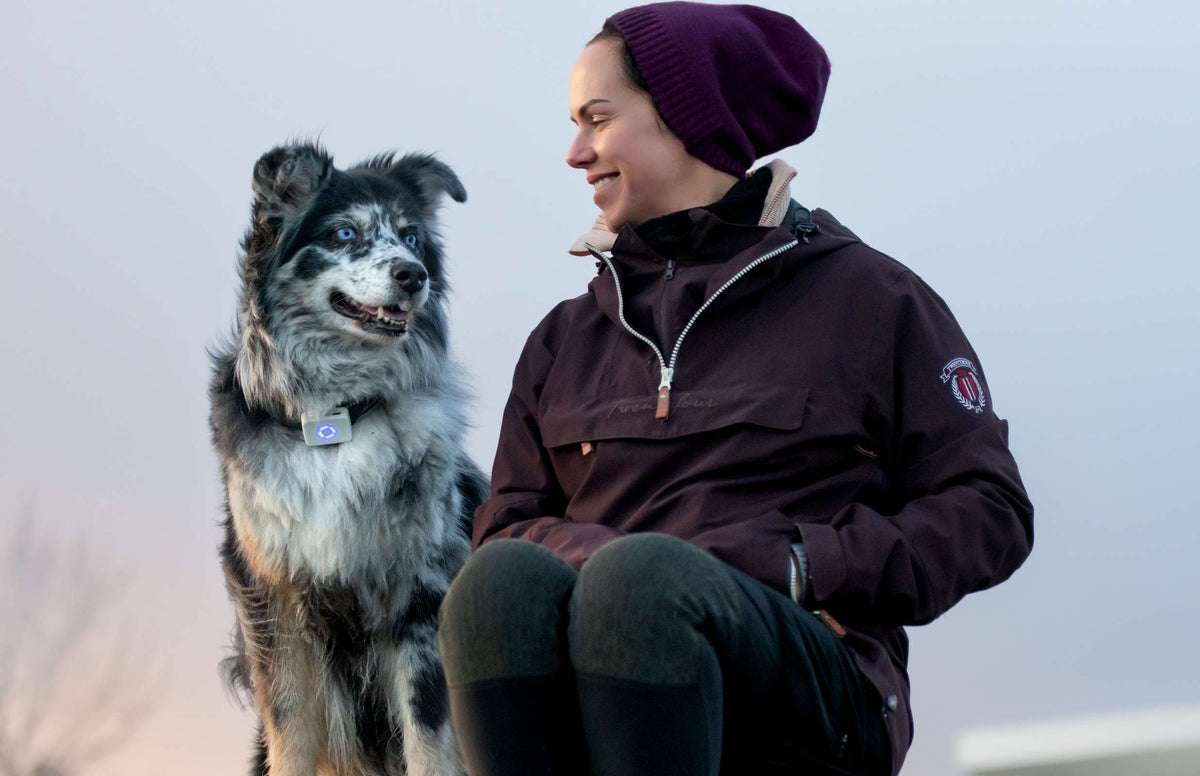
Border Collies learn quickly, watch their people closely and seem ready for almost any task. Those qualities make them fascinating dogs, but they can also make everyday life more demanding than their clever reputation suggests. If you are thinking about getting a Border Collie, it helps to consider more than exercise and enrichment. This is a dog that also needs to learn how to switch off.

This guide looks at what the breed was developed to do, how its herding instinct may show up in family life, and what to consider when it comes to training, health and choosing a puppy.
Border Collie at a glance
- Original purpose: herding dog, particularly suited to working sheep
- Origin: the border region between England and Scotland
- Size: the FCI standard gives an ideal height of 53 cm at the shoulder for males, with females slightly smaller
- Coat: moderately long or smooth, both with a dense undercoat
- Typical traits: alert, responsive, keen to learn and ready to work
- Everyday essentials: worthwhile activities, clear guidance and the ability to rest
These points describe the breed in general, not every individual dog. Temperament, energy level and needs also depend on the dog’s breeding, upbringing, health and life experience.
A herding dog bred to work with people
The Border Collie developed in the border country between England and Scotland. Generations of selective breeding shaped a dog that could move sheep across wide areas while responding closely to a shepherd’s direction.
The breed’s working ability is about more than having lots of energy. It involves endurance, quick reactions, close observation and the ability to pay attention to cues. The FCI breed standard describes the Border Collie as a keen, responsive and hard-working sheepdog.
Those instincts do not automatically disappear when a dog becomes a family pet. They may show up as intense interest in movement, quick reactions to changes in the environment or a tendency to invent jobs of its own.
Size, coat and colours
Border Collies are medium-sized, athletic dogs. The FCI standard gives an ideal shoulder height of 53 cm for males, with females slightly smaller. It does not set a fixed ideal weight. A healthy weight depends on the individual dog’s build.
The coat comes in two varieties: moderately long and smooth. Both have a dense undercoat. Black and white is probably the best-known colour combination, but Border Collies come in many other colours and patterns too. The FCI standard says that white should not predominate.
Appearance tells you little about whether a dog will suit your home. Health, temperament and the conditions in which the dog was bred should matter more than a particular colour or coat length.
Bright and observant, but not automatically easy
Border Collies often learn quickly and are sensitive to body language and changes around them. These qualities can make training rewarding, but they can also mean that the dog picks up on inconsistent signals, hectic situations or rising excitement.
The common label “highly intelligent” needs some context. Dogs can be capable in different ways: some learn cues quickly, while others stand out for their independence, stamina or ability to read human gestures. A clever dog does not automatically know what you want, and it does not need to be given a new task every minute.
A well-known example is Chaser, a Border Collie who learned and retained the names of 1,022 objects after intensive training. The study illustrates what can be achieved through sustained, structured work with one dog. It does not mean every Border Collie will have the same ability, or that all dogs of this breed learn in exactly the same way.
The first year with a Border Collie puppy
When a puppy is eager to learn, it is tempting to respond with more and more training. During the first year, though, sleep, gentle exposure to everyday life and a secure relationship with people matter just as much.
Keep training sessions short and build experiences gradually: different surfaces, ordinary household sounds, calm introductions and settling down in new places. A puppy does not need to learn as much as possible as early as possible. It needs to learn to check in with you and recover after exciting experiences.
Look for a breeder who is open about health, temperament and working lines. Ask to meet the parents where possible, learn about the puppies’ early environment and ask which health checks are recommended for that particular line. The Royal Kennel Club’s breed information is a useful starting point. The Border Collie Club of Great Britain also shares information about health testing.
Training: give the dog a job, and teach it to rest
Border Collies benefit from clear rules and calm, consistent handling. Reward-based training can help build useful behaviours and a strong working relationship. Harsh corrections may create uncertainty or add unnecessary stress, particularly for a sensitive dog.
Learning to relax is just as important as learning cues such as recall and wait. Practise settling on a bed or mat, unwinding after a walk and spending some time without being entertained. Rest is part of a healthy routine, not something a dog should have to earn.
Activities such as scent work, controlled retrieving, tricks, rally obedience or suitably supervised herding can provide satisfying challenges. Choose activities that engage your dog without keeping it constantly wound up. More speed and more repetitions are not always better.
The herding instinct can show up without sheep
Some Border Collies focus intensely on things that move. They may fixate on bicycles, joggers, cars or playing children, chase them or try to control their movements. This should not simply be dismissed as “naughty” behaviour or treated as a funny game. Near traffic, it can be dangerous.
Notice early which movements excite your dog. Create enough distance and reward calm observation and checking in with you. If your dog persistently fixates or chases, a qualified dog trainer can help you build a safe training plan.

Border Collies in families with children and other pets
A Border Collie can live in a family if its needs are taken seriously and the adults remain responsible for its care and training. Children and dogs should always be supervised. Even a friendly dog needs a quiet place where it will not be disturbed.
Fast movement and noisy play can bring out herding behaviour in some dogs. Watch for your dog staring at children, following them or trying to stop them. Calmly interrupt the situation and create more space instead of punishing the dog for reacting to an instinct.
Living with cats and other pets can work when introductions are gradual and managed safely. The individual dog matters more than the breed label. Do not leave animals alone together until you are confident about how they behave with one another.
Being left alone, living in a flat and finding a daily rhythm
A Border Collie can live in a flat if it gets regular outings, suitable activities and enough opportunity to relax at home. A garden is no substitute for walks and training. For a dog that is constantly looking for stimulation, a garden can sometimes add to the excitement rather than solve it.
Build up time alone gradually. Start with short absences and increase them slowly if your dog remains settled. Persistent barking, destruction, house-soiling or signs of panic may mean that you have moved too quickly. A tailored training plan can help; our guide to separation anxiety in dogs explains more.
There is no single number of daily exercise hours that suits every Border Collie. Age, health, temperament and training all matter. Notice whether your dog can settle after activity or is becoming increasingly restless and overexcited.
Grooming and shedding
Brush the coat regularly to remove loose hair and catch small tangles before they become mats. More grooming may be needed during seasonal shedding. Check areas where knots can form easily, such as behind the ears and around the legs.
Border Collies are not a non-shedding breed. If you are considering dogs that leave less hair around the home, see our guide to dog breeds that shed very little. Even low-shedding dogs are not completely hair-free, and the amount of shedding can vary by dog and season.
Health: questions to ask before choosing a puppy
As with other pedigree dogs, there are health conditions that breeders and prospective owners should be aware of in Border Collies. Depending on the line, these may include eye conditions such as Collie Eye Anomaly (CEA), hip dysplasia and certain inherited neurological conditions. Which checks are appropriate depends on the breeding line and current recommendations.
Ask the breeder for evidence of recommended eye and hip examinations, and ask which genetic tests have been done for the parent dogs. A DNA test only gives information about the specific condition it tests for. It does not replace a clinical examination or guarantee that a dog will remain healthy.
Do not base your decision on one test result alone. The health and temperament of the parents, a careful early environment and an open conversation about health in the line also matter. Discuss specific concerns with a vet and check current recommendations with the relevant breed organisation.
How much does a Border Collie cost?
The purchase price is only one part of the cost. Food, insurance, local dog taxes, veterinary care, equipment and, if needed, training or dog care all add up. Even a fit, healthy dog may need unexpected veterinary treatment during its lifetime.
Before bringing a dog home, look into the ongoing costs where you live and set aside a buffer for veterinary care. A low purchase price is not a good reason to compromise on traceable origins, relevant health information or good early care.
Border Collie or Australian Shepherd?
Both breeds are active herding dogs, but they have different origins, breeding histories and typical traits across their respective lines. There can also be considerable variation between individual dogs, so breed stereotypes alone are not enough to make a decision.
If you are considering both breeds, read our guide to the Australian Shepherd too. It is also worth meeting adult dogs from the lines you are interested in and asking their owners what everyday life with them is really like.
Is a Border Collie right for me?
A Border Collie may suit you if you enjoy training with your dog, pay close attention to its needs and can make room for both activities and recovery in your routine. You should be willing to offer calm guidance—even when your dog learns faster than you can come up with new exercises.
Before deciding, ask yourself:
- Can I provide worthwhile activities regularly without feeling that I must entertain my dog all the time?
- Am I ready to teach rest and time alone as patiently as recall and other cues?
- Can I manage herding behaviour and a possible sensitivity to movement?
- Do I have time and budget for training, care and veterinary treatment?
- Would an alert, work-oriented dog fit my ordinary daily life, not just my weekends?
If you are unsure, meet adult Border Collies in everyday settings and speak with a responsible breeder or breed organisation before making a decision.
Frequently asked questions about Border Collies
Are Border Collies suitable for first-time dog owners?
It depends less on the label “first-time owner” and more on how well prepared you are and what support you have. The breed can be demanding because its herding instinct, alertness and willingness to work affect everyday life. A good trainer and a careful choice of dog can make a real difference.
How much exercise does a Border Collie need?
There is no single number of hours that suits every Border Collie. Age, health and temperament all affect a dog’s needs. Walks should be balanced with suitable activities and enough rest. A dog that is constantly wound up may not need even more activity.
Can a Border Collie live in a flat?
Yes, if its needs are met and it can relax at home. A garden on its own is not enough; what matters is the shared routine, suitable activity and a calm place to rest.
Do Border Collies shed a lot?
Border Collies shed, particularly during seasonal coat changes. Regular brushing helps remove loose hair and prevent small tangles from becoming mats. The amount can vary between individual dogs.
Are Border Collies good with children?
That depends on the individual dog and how the family manages their interactions. Children and dogs should always be supervised. Fast-moving children may trigger herding behaviour in some Border Collies, so clear rules and a safe place to retreat are important.
Conclusion: a remarkable dog that needs more than exercise
The Border Collie is an alert, quick-learning herding dog with a strong willingness to work. Those qualities can make working with one especially rewarding, but they also call for a daily routine that balances meaningful activity, clear guidance and rest.
Looking beyond the breed’s intelligence and taking its herding instinct and need for downtime into account will help you decide whether a Border Collie fits your life.
Share:
Australian Shepherd – Price, Size, Temperament and Everything You Need to Know
Trude Mostue joins the board of Lildog & Lilcat