
50,000+ units sold 🎉

10 Small Dog Breeds – Popular Dogs That Stay Small

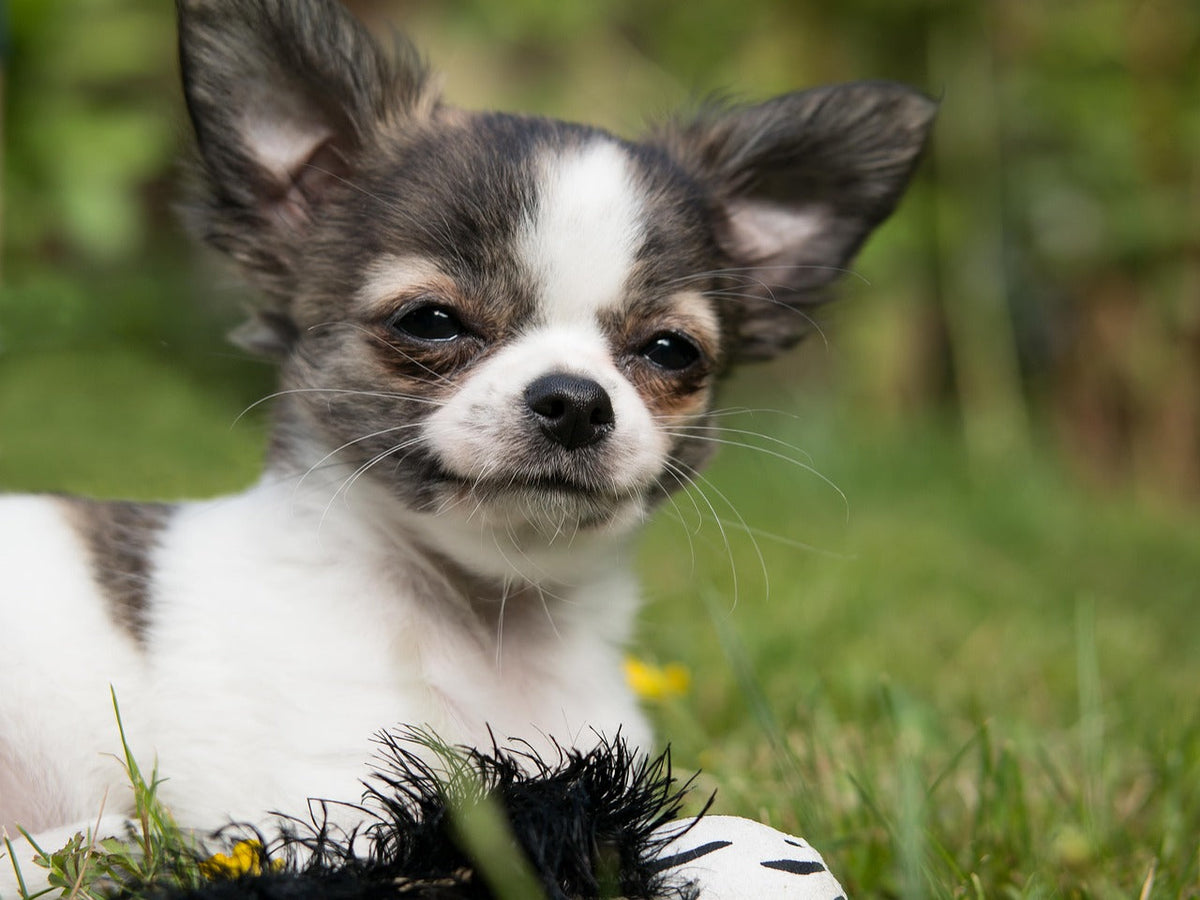
Chihuahua, one of the world's smallest dog breeds

Ask dog owners why they chose a small dog, and the answer probably has very little to do with floor space or how much the dog weighs.

Most people simply think small dogs are adorable.

Breeds such as the Chihuahua, Pomeranian and Maltese retain many of the features people associate with puppies, even when fully grown. There is a reason small dogs appear everywhere from social media and advertising to the laps of celebrities. Plenty of people simply have a soft spot for dogs small enough to pick up and carry.

Then there are the practical advantages.

Small dogs take up less room at home, are easier to lift into a car and can be more convenient to travel with. For many owners, they also fit more easily into life in an apartment, a smaller home or anywhere space is limited.

But there is one thing many first-time owners discover a little too late:

Small dogs are not necessarily easy dogs.

A 2 kg Chihuahua can be more demanding to live with than a 30 kg Labrador Retriever. Some small dog breeds are remarkably energetic. Others will alert you to every sound outside the window. Many are highly intelligent and can learn unwanted habits just as quickly as the behaviours you actually want.

So if you are looking for a small dog – whether that means a tiny toy breed or simply a dog that stays small as an adult – size should only be one part of the decision.

In this guide, we compare 10 popular small dog breeds, looking at their size, exercise needs, grooming, shedding, suitability for apartment living, life with children and which breeds may be suitable for first-time dog owners.

Contents

What Is Considered a Small Dog?

There is no universal definition of a small dog, but breeds weighing less than around 10 kg (22 lb) as adults are commonly described as small dogs.

There is still a considerable difference between a Chihuahua weighing around 2 kg (4.4 lb) and a Cavalier King Charles Spaniel weighing closer to 8 kg (18 lb). Both are considered small dogs, yet their size, exercise requirements, coat, temperament and physical needs can be quite different.

Terms such as toy dog, toy breed, miniature dog and tiny dog breed are also commonly used when people search for particularly small dogs. They do not all describe the same type of dog, however. Some tiny breeds were developed primarily as companions, while others are terriers, spitz breeds or smaller versions of working breeds.

And many people searching for a small dog are not necessarily looking for the smallest dog in the world. They simply want a dog that is manageable, fits comfortably into their lifestyle and stays relatively small when fully grown.

That is why it makes sense to consider the whole breed rather than choosing by weight alone.

Small Dog Breeds Compared

The table below provides a quick comparison of the 10 small dog breeds covered in this guide. Weights and breed characteristics are approximate, and individual dogs can vary considerably.

Breed Typical Weight Activity Level Shedding Grooming Apartment Living First-Time Owners
Chihuahua approx. 1.5–3 kg (3.3–6.6 lb) Moderate Low–moderate Low–moderate Can be suitable* Can be suitable
Pomeranian approx. 2–3.5 kg (4.4–7.7 lb) Moderate Moderate–high Moderate Can be suitable* Can be suitable
Yorkshire Terrier up to approx. 3.2 kg (7 lb) Moderate Very low Moderate–high Well suited Can be suitable
Toy Poodle often approx. 2–4 kg (4.4–8.8 lb) Moderate–high Very low High Well suited Well suited
Papillon approx. 1.5–5 kg (3.3–11 lb) Moderate–high Low–moderate Moderate Well suited* Can be suitable
Maltese approx. 3–4 kg (6.6–8.8 lb) Low–moderate Very low High Well suited Well suited
Havanese approx. 4–6 kg (8.8–13.2 lb) Moderate Very low High Well suited Well suited
Bichon Frise approx. 5–8 kg (11–18 lb) Moderate Very low High Well suited Well suited
Shih Tzu approx. 4.5–8 kg (10–18 lb) Low–moderate Low High Well suited Well suited
Cavalier King Charles Spaniel approx. 5.5–8 kg (12–18 lb) Moderate Moderate Moderate Well suited Temperament: yes**

* A tendency to alert bark can matter more than size when choosing a small dog for an apartment.

** The Cavalier King Charles Spaniel has serious documented health problems. Purebred Cavalier breeding is prohibited in Norway following a Norwegian Supreme Court ruling. This is discussed in more detail in the breed section below.

10 Small Dog Breeds

1. Chihuahua

Chihuahua, one of the smallest dog breeds

Weight: approx. 1.5–3 kg (3.3–6.6 lb)
Activity level: Moderate
Grooming: Low to moderate
Shedding: Low to moderate
Best for: Owners looking for a tiny, alert companion dog that forms a close bond with its people

The Chihuahua is widely recognised as the world's smallest dog breed and is an obvious place to start if you are looking for a dog that truly stays tiny. An adult Chihuahua may weigh only a couple of kilograms, but its size tells you very little about its personality.

Chihuahuas are typically alert, lively and confident. Many form exceptionally close bonds with their owners and pay close attention to people, other dogs and anything happening around them. That can make them engaging companions, but it can also lead to frequent alert barking if they are not taught to respond calmly to noises, visitors and activity around the home.

Despite their short legs, Chihuahuas still need daily walks and regular activity. Their tiny size also means owners need to take extra care around rough play, falls and interactions with much larger dogs, particularly with puppies and very small adults.

The breed comes in both smooth-coated and long-coated varieties. Smooth-coated Chihuahuas require relatively little grooming, while the long-coated variety needs more regular brushing. Both varieties shed.

Chihuahuas can adapt well to apartment living because they take up very little space and do not require huge amounts of physical exercise. But size alone does not make them perfect apartment dogs. A Chihuahua that barks at every sound in the hallway may be considerably harder to live beside than a calm dog several times its size.

Best suited to: Someone who wants an extremely small dog with plenty of personality and is prepared to treat it like a dog – not an accessory that gets carried everywhere.

2. Pomeranian

Pomeranian, a small spitz breed with a thick double coat

Weight: approx. 2–3.5 kg (4.4–7.7 lb)
Activity level: Moderate
Grooming: Moderate
Shedding: Moderate to high
Best for: Owners looking for a small, lively and alert spitz breed

The Pomeranian, also known as the Zwergspitz or Miniature Spitz, is one of the smallest members of the spitz family. Its enormous double coat makes the breed appear considerably larger than it really is – underneath all that fur is often a dog weighing only a few kilograms.

Pomeranians are typically lively, curious and highly aware of their surroundings. Many learn quickly and enjoy training, games and small challenges. There is far more dog underneath that teddy-bear appearance than the breed's tiny size might suggest.

The spitz heritage also means many Pomeranians are natural alert barkers. Footsteps outside the door, people passing a window or visitors arriving can all trigger a response. That does not mean every Pomeranian will bark excessively, but early training around noises, visitors and settling calmly can be particularly important when living close to neighbours.

The coat consists of a dense undercoat covered by longer guard hairs and requires regular brushing. A Pomeranian is therefore not an obvious choice for anyone determined to keep dog hair to an absolute minimum, particularly during heavier shedding periods.

On the other hand, the breed's size is extremely practical. Pomeranians take up very little room, are easy to transport and can live happily in an apartment provided their exercise and mental stimulation needs are met.

Best suited to: Someone who wants a tiny, intelligent and alert dog and does not mind regular coat care or a companion that likes to keep track of everything happening around it.

3. Yorkshire Terrier

Yorkshire Terrier, a small terrier breed with a long silky coat

Weight: up to approx. 3.2 kg (7 lb)
Activity level: Moderate
Grooming: Moderate to high
Shedding: Very low
Best for: Owners who want a very small dog with a distinctly terrier-like personality

The Yorkshire Terrier may look like an elegant little companion dog, but underneath the silky coat is a genuine terrier heritage. The breed's ancestors were used to control rats and other vermin, and modern Yorkies still retain plenty of that alert, curious and self-confident terrier character.

A Yorkie is therefore not necessarily a dog that simply wants to sit quietly on your lap. Many are active, playful and intensely interested in whatever is happening around them. They need regular walks, play and training, although their tiny bodies make their exercise requirements manageable for many owners.

Yorkshire Terriers can adapt well to apartments and smaller homes, but their terrier instincts may show themselves through alert barking and an interest in chasing small animals. As always, there can be substantial differences between individual dogs.

The breed's distinctive coat sheds very little, but that does not make it low-maintenance. A long coat requires frequent brushing and careful upkeep. Many pet Yorkies are therefore kept in a shorter trim, which makes everyday grooming considerably easier.

Their tiny size also means owners need to be careful with handling and rough play, particularly in homes with very young children or much larger dogs.

Best suited to: Someone who enjoys the bold, alert character of a terrier but wants it in a very small and practical package.

4. Toy Poodle

Toy Poodle playing in the grass

Weight: often approx. 2–4 kg (4.4–8.8 lb)
Activity level: Moderate to high
Grooming: High
Shedding: Very low
Best for: Owners looking for a small, highly trainable dog that enjoys learning

The Toy Poodle combines a genuinely tiny size with many of the qualities that make Poodles such popular training and family dogs. This is not simply a miniature lapdog with an elaborate haircut. Toy Poodles are typically attentive, cooperative and exceptionally quick learners.

That makes the breed particularly appealing to people who want a small dog they can actively train and engage with. Tricks, scent games, obedience and other forms of mental enrichment are often an excellent fit. Toy Poodles also need normal daily walks and physical exercise, even if they obviously require less physical space than a large working breed.

That intelligence has another side to it: smart dogs learn unwanted behaviours just as efficiently as useful ones. A Toy Poodle therefore benefits from consistent training and enough mental stimulation to keep its brain occupied.

Toy Poodles can adapt extremely well to apartment living when their exercise needs are met. How well a dog can settle indoors and whether its physical and mental needs are being satisfied matter far more than the number of square metres in the home.

The coat sheds very little, which is a major advantage for many owners. The trade-off is grooming. Poodle hair continues to grow and requires regular brushing, clipping and maintenance. Very low shedding definitely does not mean very little coat care.

Best suited to: Someone who wants a very small dog with serious training potential and genuinely enjoys teaching, playing and working with their dog.

5. Papillon

Papillon, a small dog breed with distinctive butterfly-shaped ears

Weight: approx. 1.5–5 kg (3.3–11 lb)
Activity level: Moderate to high
Grooming: Moderate
Shedding: Low to moderate
Best for: Owners looking for a small, lightweight and athletic companion dog

The Papillon is instantly recognisable by its large, fringed ears, which resemble the wings of a butterfly. In fact, the breed's name comes from the French word for butterfly.

Its elegant appearance might suggest a typical lapdog, but the Papillon is often surprisingly active, quick and highly trainable. This is a small breed that is usually capable of far more than a few short walks around the neighbourhood.

Papillons can excel at obedience, agility, trick training and other dog sports. Their low body weight makes them easy to handle and transport, while their athleticism often surprises people who expect very little from a dog weighing only a few kilograms.

The breed can adapt well to apartment living provided it receives enough physical activity and mental stimulation. Papillons are alert dogs, however, and some will quickly respond to noises and activity around the home. Teaching a young Papillon how to settle and respond calmly to everyday sounds can therefore be particularly useful.

The coat looks fairly substantial, but the Papillon does not have the same dense undercoat found in many spitz breeds. Regular brushing is still necessary, particularly around the ears and other areas where the longer hair can become tangled.

With particularly small individuals, owners should also take their size into account during play with young children and much larger dogs.

Best suited to: Someone who wants a small dog because they prefer a small size – not because they want a dog that requires minimal activity.

6. Maltese

Maltese, a small white companion dog

Weight: approx. 3–4 kg (6.6–8.8 lb)
Activity level: Low to moderate
Grooming: High
Shedding: Very low
Best for: Owners looking for a small, affectionate and people-oriented companion dog

The Maltese is an ancient companion breed with a long history of living closely alongside people. That heritage is often reflected in its temperament. Many Maltese are sociable, affectionate and strongly attached to their owners.

The breed is small enough to adapt well to compact homes and does not require huge amounts of physical exercise. That does not mean a Maltese should spend its life being carried around. Like any other dog, it needs daily walks, play, training and opportunities to explore its surroundings.

For people looking for a small dog that sheds very little, the Maltese is an obvious breed to consider. Its long white coat sheds considerably less than the coats of many other dog breeds.

The trade-off is grooming. When kept long, the coat requires frequent brushing to prevent tangles and matting, while the hair around the eyes and face often needs additional attention. Many pet Maltese are therefore kept in a shorter trim to make everyday coat care easier.

Maltese can adapt well to apartment living and may be a good choice for first-time owners looking for a small companion dog. Because the breed often forms very close bonds with people, it is also important to introduce being left alone gradually rather than assuming a small companion breed will automatically cope well on its own.

Best suited to: Someone who wants a small, sociable companion dog, values very low shedding and accepts that regular grooming comes with the package.

7. Havanese

Havanese, a small and sociable family dog

Weight: approx. 4–6 kg (8.8–13.2 lb)
Activity level: Moderate
Grooming: High
Shedding: Very low
Best for: Families and first-time owners looking for a sociable and adaptable small dog

The Havanese is a small companion breed that combines a manageable size with a little more physical substance than the tiniest toy breeds. For some families, that can be an advantage: you still get a genuinely small dog without necessarily having a dog that weighs only two or three kilograms.

The Havanese is typically sociable, curious, playful and closely attached to its family. Many live happily with children and other dogs when properly socialised and treated with respect.

Exercise requirements are generally moderate. Havanese need daily walks, play and mental stimulation, but they do not usually require extreme amounts of physical exercise. This balance can make the breed appealing to both families and first-time dog owners.

Havanese can also adapt well to apartment living. They may alert their owners when someone arrives, but persistent barking is not generally considered a defining characteristic of the breed. Individual temperament, environment and training still have a major influence on how vocal any dog becomes.

The coat sheds very little, but that means more work with a brush rather than no coat maintenance at all. Loose and dead hairs tend to remain trapped within the coat and can form mats if they are not removed. Regular brushing and grooming are therefore essential.

Because Havanese tend to be highly social and people-oriented, training them to spend time alone should also be taken seriously from the beginning. A sociable dog still needs to learn that being left alone for reasonable periods is safe and normal.

Best suited to: Someone looking for a sociable, adaptable small family dog who is prepared to spend time maintaining its coat.

8. Bichon Frise

Bichon Frise, a small white dog with a curly coat

Weight: approx. 5–8 kg (11–18 lb)
Activity level: Moderate
Grooming: High
Shedding: Very low
Best for: Owners looking for a sociable small companion dog with minimal shedding

The Bichon Frise is known for its white, curly coat and distinctive rounded appearance. Underneath the carefully groomed exterior is a lively little companion dog that generally enjoys being close to people.

The breed is small without being exceptionally tiny. For some families, that makes the Bichon Frise a useful middle ground: the dog is still easy to handle, lift and take along, but has a little more physical substance than a Chihuahua or Yorkshire Terrier.

Bichon Frises generally have moderate exercise needs. Daily walks, play and mental stimulation are important, but most do not require hours of strenuous physical exercise. This makes the breed worth considering for apartment living and for people looking for a companion rather than a particularly demanding working dog.

The coat is both an advantage and a commitment. Bichon Frises shed very little, but their hair continues to grow and requires substantial maintenance. Regular brushing and clipping are necessary to prevent matting and keep the coat in good condition.

The breed can be a good option for first-time dog owners who are prepared for the grooming requirements. As with several other highly social companion breeds, training a Bichon Frise to spend time alone should be introduced gradually.

Best suited to: Someone looking for a sociable, manageable small dog who wants very little loose hair around the home and does not mind regular brushing and clipping.

9. Shih Tzu

Shih Tzu, a small long-haired companion dog

Weight: approx. 4.5–8 kg (10–18 lb)
Activity level: Low to moderate
Grooming: High
Shedding: Low
Best for: Owners looking for a calmer small companion dog

The Shih Tzu differs from several of the small breeds on this list in having relatively moderate exercise requirements. Developed primarily as a companion dog, the breed is often happiest in a lifestyle where spending time with its family matters more than long training sessions or demanding physical exercise.

That does not mean a Shih Tzu does not need activity. Daily walks, play and mental stimulation are still important, but the breed may be a better match than a Papillon or Toy Poodle for someone looking for a calmer small dog.

Shih Tzus are often described as friendly, sociable and adaptable, although they can also have an independent streak. They can adapt well to apartment living because they require relatively little space and generally do not have exceptionally high exercise needs.

The long coat, however, is demanding. If kept at full length, it requires frequent brushing and maintenance. Many pet Shih Tzus are therefore kept in a shorter trim to make everyday grooming considerably more manageable.

The Shih Tzu is a brachycephalic, or flat-faced, breed. This makes breathing and overall anatomy particularly important considerations. Exaggerated physical features can affect the airways, eyes and ability to regulate body temperature. Choosing a responsible breeder who prioritises health, functional anatomy and breathing ability is therefore especially important.

Best suited to: Someone looking for a less active small companion dog who is prepared for substantial grooming and understands the health considerations associated with the breed's anatomy.

10. Cavalier King Charles Spaniel

Cavalier King Charles Spaniel, a small companion and family dog

Weight: approx. 5.5–8 kg (12–18 lb)
Activity level: Moderate
Grooming: Moderate
Shedding: Moderate
Best for: Temperament-wise, many families – but the breed's serious health problems must be part of the decision

The Cavalier King Charles Spaniel has many of the characteristics people typically look for in a small family dog. Cavaliers are generally sociable, affectionate, playful and people-oriented, while still being active enough to enjoy walks and a variety of activities.

Their size is practical too. Cavaliers are small and relatively easy to handle, but generally have more physical substance than the tiniest toy breeds. Combined with their temperament, this has made the breed popular with families and first-time dog owners.

However, the Cavalier King Charles Spaniel cannot be evaluated on temperament alone.

The Cavalier King Charles Spaniel has serious documented health problems. In Norway, breeding purebred Cavaliers is prohibited following a 2023 Norwegian Supreme Court ruling.

Health conditions central to concerns about the breed include heart disease and neurological disorders. The Norwegian Kennel Club has been involved in a crossbreeding programme intended to preserve desirable Cavalier characteristics while improving health and genetic diversity.

This does not mean existing Cavaliers cannot be wonderful and deeply loved family dogs. But anyone considering a dog with Cavalier ancestry should take the breed's health situation seriously. For prospective owners in Norway, the legal breeding situation is also essential information; elsewhere, prospective owners should investigate the health programmes, breeding practices and regulations relevant to their own country.

Best suited to: Temperament-wise, Cavaliers can suit many households extremely well, but anyone considering a Cavalier or a dog with Cavalier ancestry should thoroughly investigate the health implications and local breeding situation first.

Which Small Dogs Are Best for First-Time Owners?

Havanese, Maltese, Toy Poodles, Bichon Frises and Shih Tzus are among the small dog breeds that can be suitable for first-time owners, but the right choice depends on how much exercise, grooming and training you actually want to take on.

If you have never owned a dog before, it is easy to focus heavily on appearance. The problem is that you will be living with the dog's temperament and everyday needs for many years, not just looking at it.

For a first-time dog owner, it can therefore make sense to look for a breed that is sociable, reasonably cooperative and manageable in everyday life.

  • Havanese: sociable and adaptable, but requires substantial coat care.
  • Maltese: small and people-oriented, but its long coat requires regular maintenance.
  • Toy Poodle: highly intelligent and trainable, but needs plenty of mental stimulation.
  • Bichon Frise: sociable and manageable in size, but requires regular brushing and clipping.
  • Shih Tzu: often calmer than several other small breeds, but requires significant grooming and extra consideration of health and anatomy.

A breed that feels easy for one first-time owner may be completely wrong for another. An active person who enjoys dog training might find a Toy Poodle ideal, while someone primarily looking for a calmer companion may be better matched with a Shih Tzu.

The Cavalier King Charles Spaniel has a temperament that has traditionally made the breed attractive to first-time owners. However, because of its serious health problems – and the specific breeding situation in Norway – it should not be presented as a straightforward first-time choice without those issues being clearly addressed.

The Smallest Dog Isn't Necessarily the Easiest

A smaller dog is easier to lift and takes up less physical space, but that does not necessarily make it easier to train or live with.

People often assume that small dogs are automatically easier than large dogs. In reality, size is only one part of the equation.

A Chihuahua may weigh just 2 kg (4.4 lb), yet be far more alert to sounds, people and movement than a much larger, calmer dog. That can mean the smaller dog responds more quickly when someone approaches the home or something happens outside the window.

For some owners, that is perfectly manageable. For others, it means considerably more noise and activity than they expected from such a tiny dog.

When choosing a dog, comparing temperament, exercise requirements and everyday needs is therefore usually far more useful than comparing weight alone.

Are Small Dogs Less Work?

Small dogs eat less and are physically easier to handle, but they still need walks, training, socialisation and mental stimulation.

Toy Poodles and Papillons are good examples of small dogs that can thrive on training and problem-solving activities. A small body does not eliminate the need to use the brain attached to it.

Other breeds demand time in a completely different way. Maltese, Bichon Frises and Havanese may leave relatively little loose hair around the home, but their coats require regular brushing, clipping and maintenance instead.

A small dog may also be easier to entertain in a limited amount of space, but indoor play cannot replace walks, environmental exposure and opportunities to explore the world outside the home.

So do not choose a small dog simply because you assume a smaller body automatically comes with a smaller workload.

Small Dogs Need Training Too

When a small dog jumps up at visitors, pulls on the lead or barks at people passing by, the behaviour is often tolerated more readily than when a 35 kg (77 lb) dog does exactly the same thing.

That does not make the behaviour any less important.

Small dogs benefit from the same fundamental life skills as larger dogs: recall, settling calmly, comfortable handling, socialisation, engagement with their owner and the ability to pass other people and dogs appropriately.

It is also very easy to pick up a small dog whenever a difficult situation arises. Sometimes that is absolutely necessary, particularly when safety is involved. But if a dog is always carried away rather than being taught how to cope with ordinary situations, valuable training opportunities can be lost.

Being small makes a dog easier to control physically. It does not make training less important.

Which Small Dogs Are Good with Children?

Havanese, Bichon Frises and several other sociable small companion breeds can do well in families with children, but the child's age, the dog's size and the individual dog's temperament matter just as much as breed.

It is easy to assume that a small dog is automatically better suited to children because it is easier to handle. That is not necessarily the case.

A very small dog can be injured more easily if it is dropped, stepped on or subjected to rough play. A 2 kg (4.4 lb) Chihuahua may therefore require more careful handling than a slightly larger small dog weighing six or eight kilograms.

Among the breeds in this guide, Havanese and Bichon Frises are worth considering for families looking for a small, sociable dog. Maltese and Shih Tzus can also do well in family homes, depending on the individual dog, its training and how children interact with it.

Whatever the breed, children should be taught to leave dogs alone while they are eating or sleeping, avoid picking them up carelessly and respect them when they move away. Interactions between young children and dogs should always be supervised by an adult.

For families with young children, a slightly sturdier small dog may therefore be a better choice than one of the tiniest toy breeds.

Are Small Dogs More Fragile?

The smallest dogs generally tolerate less physical impact than larger dogs, but being small does not necessarily mean being weak or fragile.

A Chihuahua weighing around 2 kg (4.4 lb) has far less body mass to protect it if it falls from a high sofa, is accidentally stepped on or collides with a much larger dog. The same applies to very small puppies of other breeds.

At the same time, plenty of small dog breeds are athletic and surprisingly robust. The Papillon is a good example of a tiny dog capable of being active and sporty, while the Yorkshire Terrier has its roots as a working terrier.

The point is not to protect a small dog from normal physical activity. It is to recognise situations where a major difference in size genuinely creates additional risk.

Best Small Dogs for Apartment Living

Havanese, Maltese, Shih Tzus and Bichon Frises are among the small dog breeds that can adapt well to apartment living. However, barking, exercise requirements and the ability to settle indoors are often more important than size alone.

One reason many people look for a small dog is that they live in an apartment or have limited space. A dog that does not occupy half the living room is certainly convenient, but body weight tells you surprisingly little about how easy a dog will actually be to live with.

A calm 7 kg (15 lb) dog that sleeps through noises outside the front door may be far easier to live with in an apartment building than a 2 kg (4.4 lb) dog that barks every time the lift stops or a neighbour opens their door.

When choosing a small dog for an apartment, it is particularly useful to consider:

  • how easily the dog settles indoors
  • its tendency to alert bark
  • daily exercise requirements
  • need for mental stimulation
  • how well the dog copes with being left alone
  • access to suitable walking and exercise areas nearby

Havanese, Maltese, Shih Tzus and Bichon Frises have characteristics that can make them suitable for people living in smaller homes. Toy Poodles and Papillons can also thrive in apartments, although they generally need more mental and physical activity.

Chihuahuas and Pomeranians take up very little physical space, but both can be highly alert to noises and activity around the home. Training them to settle calmly and manage alert barking can therefore be especially important when living close to neighbours.

A small apartment is not necessarily a problem for a dog as long as the dog's actual needs are being met.

Which Small Dogs Bark the Least?

No small dog breed can be guaranteed to bark very little. Genetics, individual temperament, environment, socialisation and training all influence how vocal a dog becomes.

There are still differences between breed types. Dogs historically bred to be alert watchdogs or to respond quickly to activity around them may be more inclined to react to noises and movement than some breeds developed primarily for companionship.

Pomeranians, for example, are small spitz dogs that tend to pay close attention to their surroundings and may be quick to alert their owners. Chihuahuas and Papillons can also be highly responsive to noises and activity around them.

Havanese may alert when someone arrives, but persistent barking is not generally considered a defining breed characteristic. Shih Tzus also tend to have a calmer overall activity level than some of the more alert toy breeds.

That does not mean a Havanese or Shih Tzu will automatically be quiet, or that every Pomeranian will be particularly vocal.

If low barking is an important priority, look beyond the breed label. Ask about the temperament of the parent dogs, discuss barking tendencies with the breeder and start training early around doors, windows, visitors and everyday noises.

Small Dog Breeds That Shed Very Little

Toy Poodles, Bichon Frises, Havanese and Maltese are among the most popular small dog breeds that shed very little.

For many people, the amount of dog hair left on clothes, furniture and floors is an important consideration when choosing a breed. But three things that are frequently confused need to be separated:

Low shedding, low-maintenance grooming and hypoallergenic are not the same thing.

Dogs that shed very little can actually require considerably more coat maintenance than breeds that regularly shed loose hair.

  • Toy Poodle: sheds very little, but requires regular brushing and clipping.
  • Bichon Frise: sheds very little, but its curly coat requires extensive maintenance.
  • Havanese: loose and dead hairs tend to remain trapped in the coat and need to be brushed out.
  • Maltese: sheds very little, but its long coat requires regular brushing and maintenance.

No dog breed can be guaranteed to be hypoallergenic either. Dog allergies are not caused solely by the hair itself; allergens can also be present in substances such as dander and saliva.

If allergies are a major factor when choosing a dog, the person affected should spend time around the breed – preferably including adult dogs – before the family makes a final decision.

Are Small Dogs Cheaper to Own?

Small dogs can cost less in certain areas, but many of the largest expenses associated with dog ownership are affected far less by body size than you might expect.

A small dog eats less than a large dog, so food costs can be considerably lower. Travel carriers, some types of equipment and medications dosed according to body weight may also cost less.

But plenty of expenses do not disappear simply because your dog weighs 3 kg (6.6 lb):

  • pet insurance
  • vaccinations and routine health checks
  • veterinary treatment
  • dental care
  • training classes
  • dog sitting, daycare or boarding
  • equipment and supplies

For breeds such as Bichon Frises, Maltese, Havanese and Toy Poodles, regular professional grooming can also become a significant ongoing expense.

If cost is one of your main reasons for choosing a small dog, consider the total cost of ownership rather than simply how much food the dog will eat.

Can Small Dogs Travel in the Cabin on a Plane?

Some airlines allow small dogs to travel in the aircraft cabin if the dog and its carrier meet the airline's size and weight requirements.

This can be a significant practical advantage for people who travel frequently, and naturally it is the smallest dogs that are most likely to meet cabin restrictions.

Breeds such as Chihuahuas, Yorkshire Terriers, Maltese and Pomeranians may be small enough to qualify for in-cabin travel with some airlines.

Breed alone does not determine whether a dog is allowed in the cabin. Airline policies may include restrictions covering:

  • the combined weight of the dog and carrier
  • carrier dimensions
  • the number of animals permitted in the cabin
  • route and destination
  • vaccination and documentation requirements

A Chihuahua may therefore meet the requirements of one airline but not another, while a larger individual of the same breed may exceed the permitted limits.

Always check the airline's current pet travel policy directly before booking travel for your dog.

Do Small Dogs Live Longer Than Large Dogs?

Yes. On average, small dog breeds generally live longer than large and giant dog breeds.

That does not mean every small dog will live to an old age, or that body size alone determines lifespan. Genetics, inherited health conditions, breeding practices, body weight, veterinary care and lifestyle all play important roles.

There is, however, a clear relationship between body size and lifespan within domestic dogs, with very large breeds tending to have shorter average lifespans than smaller breeds.

Many small dogs can live well into their teens. That is worth considering before bringing one home: the tiny puppy you choose today could be part of your family for a very long time.

Which Small Dog Breed Is Right for You?

The best small dog is not necessarily the smallest breed. It is the breed whose exercise requirements, temperament and everyday needs fit your lifestyle.

If you're looking for... Breeds worth considering
One of the smallest dog breeds Chihuahua, Pomeranian, Yorkshire Terrier
A small dog with lots of training potential Toy Poodle, Papillon
A sociable small family dog Havanese, Bichon Frise
A calmer small companion dog Shih Tzu, Maltese
As little shedding as possible Toy Poodle, Bichon Frise, Havanese, Maltese
A small and athletic dog Papillon, Toy Poodle
A dog that can adapt well to apartment living Havanese, Maltese, Shih Tzu, Bichon Frise

It is easy to start looking for a dog with a picture in your head of what you want it to look like. A few months later, however, how that dog fits into an ordinary Tuesday matters far more than how cute it looked in its puppy photos.

Think realistically about how much walking you want to do, how much coat maintenance you are prepared for, whether you enjoy dog training, how much noise your living situation can tolerate, how long the dog may need to spend alone and who else the dog will be living with.

Many people begin by searching for the world's smallest dog and eventually choose a slightly larger breed because its temperament and needs are a much better fit for their lifestyle.

The right small dog is not the one that takes up the least space. It is the one that fits best into the life you actually live.

Frequently Asked Questions About Small Dogs

What is the smallest dog breed in the world?

The Chihuahua is widely recognised as the world's smallest dog breed. Adult Chihuahuas typically weigh around 1.5–3 kg (3.3–6.6 lb), although size varies between individual dogs.

Which dog breeds stay small when fully grown?

Chihuahuas, Pomeranians, Yorkshire Terriers, Toy Poodles, Papillons and Maltese are examples of dog breeds that stay very small as adults. Havanese, Bichon Frises and Shih Tzus are somewhat larger but are still considered small dog breeds.

What is the best small dog for a first-time owner?

Havanese, Maltese, Toy Poodles, Bichon Frises and Shih Tzus can all be good options for first-time dog owners. The best choice depends on your preferred activity level, how much grooming you are prepared to do, the temperament you want and how much time you want to spend on training.

Which small dog breeds shed the least?

Toy Poodles, Bichon Frises, Havanese and Maltese are among the small dog breeds that shed very little. However, all four require regular coat maintenance and grooming.

Are there any small dog breeds that don't bark?

No. No dog breed can be guaranteed not to bark. Some breeds have a stronger tendency to alert bark than others, but genetics, individual temperament, environment, socialisation and training all influence how much a dog barks.

What are the best small dogs for apartments?

Havanese, Maltese, Shih Tzus and Bichon Frises can be good choices for apartment living. Toy Poodles and Papillons can also adapt well if they receive enough exercise and mental stimulation. A dog's tendency to bark and its ability to settle indoors are often more important than size alone.

Are small dogs easier to own?

Not necessarily. Small dogs take up less space and are easier to lift, but they still need training, exercise, walks, socialisation and mental stimulation. Several small dog breeds also require extensive grooming.

Are small dogs good with children?

Many small dogs can live very successfully with children, but the tiniest breeds can be more vulnerable to injury from rough handling. The individual dog's temperament, the child's age and appropriate adult supervision are therefore more important than size alone.

Are small dogs cheaper than large dogs?

Small dogs can cost less in some areas, particularly food. However, expenses such as insurance, veterinary treatment, vaccinations, training and dog sitting or boarding may be similar to those for larger dogs.

Can small dogs travel in the cabin on a plane?

Some airlines allow small dogs to travel in the cabin if the combined dog and carrier meet their size and weight limits. Rules vary considerably between airlines and routes, so always check the airline's current requirements before travelling.

Do small dogs live longer than large dogs?

Generally, yes. Small dog breeds have a longer average lifespan than large and giant breeds, although genetics, health, breeding practices and lifestyle also have a major influence on longevity.

Latest Stories

This section doesn’t currently include any content. Add content to this section using the sidebar.