
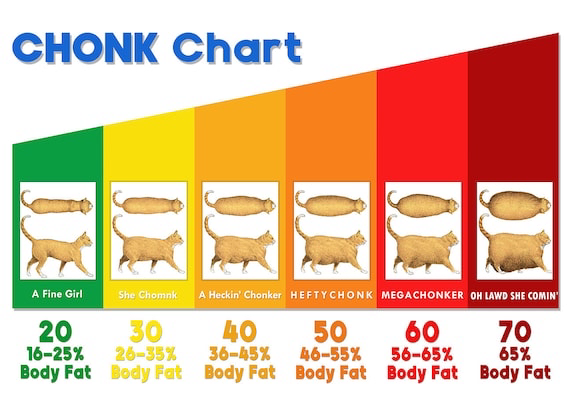

Chonk Chart -meemi luokittelee kissat asteikolla, jonka toisessa päässä on “A Fine Boi” ja toisessa “Oh Lawd He Comin”. On vaikea olla nauramatta kissalle, joka täyttää koko sohvan. Meemi saa kuitenkin myös miettimään: onko kissallani vain tuuhea turkki, vai onko se todella lihonut?
Eroa voi olla vaikea huomata. Turkki peittää kehon muotoja, ja paino nousee usein vähitellen. Vyötärön ja kylkiluiden tunnustelu kertoo enemmän kuin hauska kuva – ja paljon enemmän kuin se, mihin meemikategoriaan kissa päätyisi.
Chonk Chart on karkea vertailu, ei terveystarkastus
Chonk Chart pisteyttää kissaa sen koon perusteella. Eläinlääkäri arvioi kissan kuntoa toisella tavalla: tarkastelemalla sen kehoa ylhäältä ja sivulta sekä tunnustelemalla kylkiluita. Pelkkä paino ei myöskään riitä. Kaksi samanpainoista kissaa voi olla rakenteeltaan ja kuntoluokaltaan hyvin erilaisia.
Siksi pitkäkarvainen kissa voi näyttää pyöreältä olematta ylipainoinen. Lyhytkarvainen kissa taas voi lihoa niin, ettei muutos näy kuvissa helposti. Kissan kuntoa arvioidessa kannattaa käyttää sekä silmiä että käsiä.
Yksinkertainen tarkistus: vyötärö, vatsa ja kylkiluut
Aseta kissa seisomaan neljälle jalalle ja tarkastele sen kehoa rauhassa. Älä vertaa sitä tiettyyn rotuun tai Chonk Chartiin. Tarkista nämä kohdat:
- Ylhäältä: Kylkiluiden takana pitäisi näkyä vyötärö. Jos vartalo on yhtä leveä kylkiluista lantioon, vyötärölle voi olla kertynyt ylimääräistä rasvaa.
- Sivulta: Vatsalinja kaartuu yleensä hieman ylöspäin kylkiluiden takaa. Selvästi pyöristynyt vatsa voi olla syy tutkia tilannetta tarkemmin.
- Tunnustelemalla: Kylkiluut pitäisi tuntea kevyesti painamalla. Jos niitä on vaikea löytää ilman voimakasta painamista, kissa saattaa olla ylipainoinen.
Tämä on suuntaa antava tarkistus, ei diagnoosi. Evidensian ohjeessa kissan painon arviointiin käsitellään kylkiluiden tunnustelua ja vyötärölinjaa. Jos olet epävarma, eläinlääkäri voi tutkia kissan ja auttaa tulkitsemaan havaintojasi.
Ylimääräinen ruoka, jota kissa saa kodin ulkopuolella
Mittaa ruoka-annokset, rajoitat herkkuja ja seuraat kissan painoa. Silti mitään ei tunnu tapahtuvan. Jos kissa ulkoilee, yksi mahdollinen selitys on, että se saa ruokaa myös muualla.
Ehkä naapuri antaa sille kuivaruokaa, koska kissa näyttää nälkäiseltä. Ehkä toinen naapuri tarjoaa herkun joka iltapäivä. Pienet lisäannokset voivat kasautua, ja kissan päivittäinen energiansaanti voi ylittää suunnitellun ruokamäärän huomaamatta.
Kokeile näitä ennen kuin muutat kissan ruokintaa:
- Kirjaa ylös kaikki kotona annettu ruoka, herkut ja ruoantähteet.
- Kysy naapureilta ystävällisesti, antavatko he kissalle ruokaa.
- Jos useampi perheenjäsen ruokkii kissaa, sopikaa, kuka antaa kunkin aterian.
- Seuraa kissan painoa ajan mittaan sen sijaan, että vertaisit yksittäisiä päiviä.
Viikon ruokapäiväkirja voi paljastaa tapoja, joita et muuten huomaisi. Siitä voi olla apua myös eläinlääkärille, jos haluatte arvioida kissan painoa ja ruokintaa tarkemmin.
Mitä GPS-tiedot voivat – ja eivät voi – kertoa
GPS-paikannin voi näyttää, missä kissa on käynyt, kuinka usein se vierailee tietyissä paikoissa ja miten sen liikkuminen muuttuu. Lilcatissa on sijaintihistoria ja aktiivisuuden seuranta, joiden avulla kissan liikkumisesta saa tarkemman kuvan.
Jos sijaintihistoria näyttää, että kissa pysähtyy usein saman talon luona, voit selvittää, saako se siellä ruokaa. Kartta näyttää kuitenkin vain paikantimen sijainnin. Se ei kerro, syötettiinkö kissaa, kuka talossa oli tai miksi kissan paino on noussut.
Aktiivisuustiedoillakin on rajansa. Rekisteröidyn liikkumisen vähenemistä kannattaa seurata, mutta se ei yksin kerro, onko kissalla kipuja tai ylipainoa. Jos aktiivisuus tai käytös muuttuu selvästi, ota yhteyttä eläinlääkäriin.
Milloin ylimääräiset kilot vaikuttavat terveyteen
Kissan ylipaino liittyy suurempaan riskiin sairastua esimerkiksi diabetekseen ja nivelvaivoihin. Liikkuminen ja turkin hoitaminen voivat myös vaikeutua. SEY Suomen eläinsuojelu kertoo, että leikatun kissan energiantarve voi olla noin 20–30 prosenttia pienempi kuin leikkaamattoman kissan. Tämä ei tarkoita, että kaikille kissoille sopisi sama ruokamäärä, mutta ruokintaa ja painoa kannattaa seurata leikkauksen jälkeen.
Jos kissan pitäisi laihtua, älä paastota sitä tai vähennä ruokaa rajusti omin päin. Nopea painonpudotus ja syömättömyys voivat johtaa vakavaan rasvamaksaan. Eläinlääkäri voi arvioida kissan kunnon, selvittää painonmuutoksen mahdollisia syitä ja tehdä turvallisen suunnitelman ruokinnasta ja seurannasta. Lue lisää kissan ylipainosta SEY Suomen eläinsuojelun sivuilta.
Meemistä käytännön tekoihin
Chonk Chart voi saada nauramaan kissalle, joka näyttää vähän liian pyöreältä. Jos olet huolissasi kissan terveydestä, tarkista sen vyötärö ja kylkiluut, pidä kirjaa sen ruoasta ja kysy, onko joku muu saattanut antaa sille aterioita.
GPS-tiedot voivat auttaa löytämään toistuvia reittejä ja käyntipaikkoja. Ne eivät kerro, onko kissa ylipainoinen tai mitä se on syönyt matkan varrella. Arviossa kannattaa huomioida kissan keho, muutokset ajan mittaan ja eläinlääkärin neuvot.
Share:
Kuinka kylmää koira kestää? Talvilenkit ja kylmän merkit
Koirat, jotka eivät juuri karvaa: 25 vähän karvaa irrottavaa rotua